
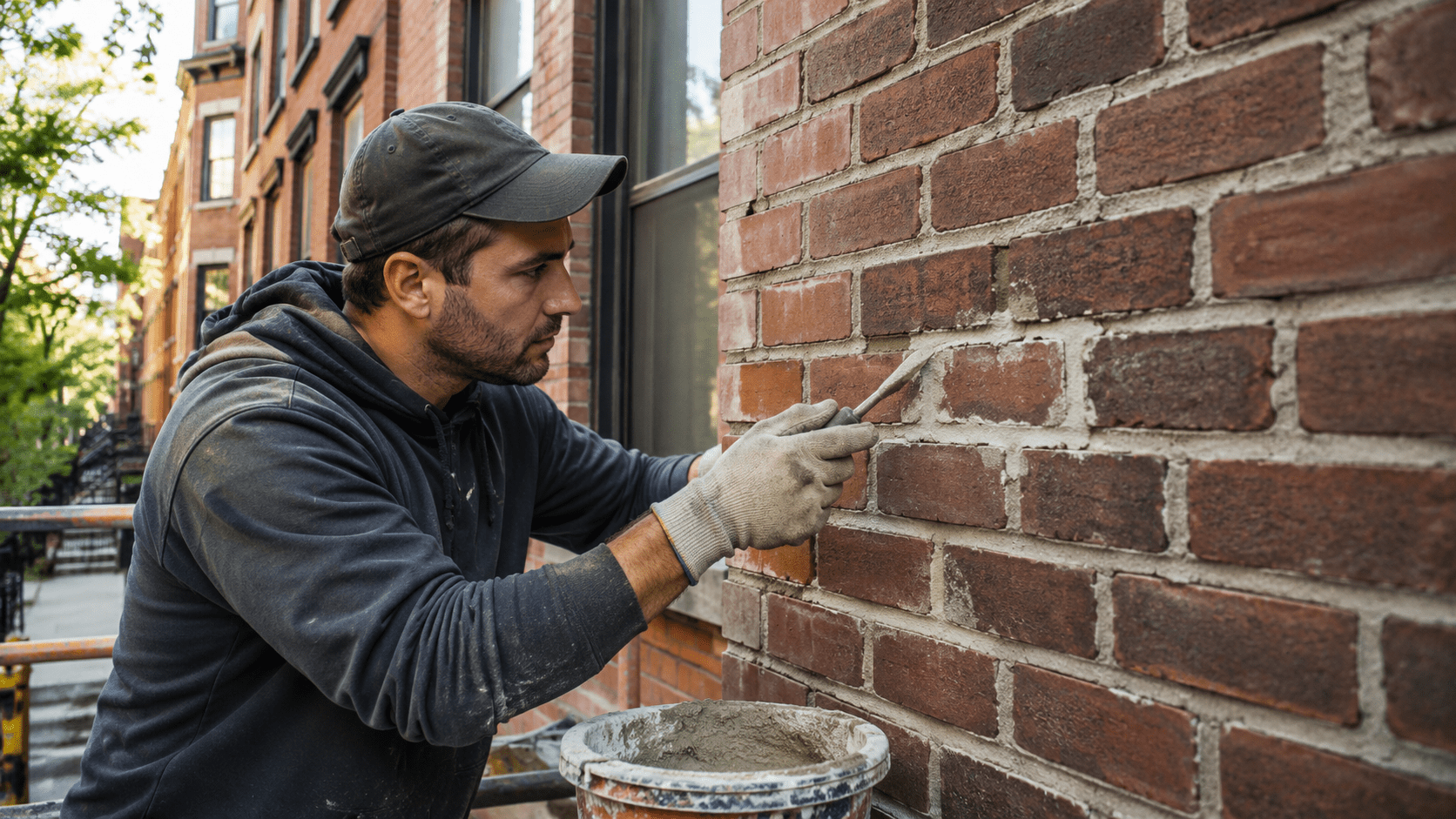
Brick buildings are a familiar part of New York City, from Brooklyn row houses to apartment buildings in Queens and Manhattan. But even strong brickwork needs maintenance over time. Brick pointing is one of the most important repairs for older masonry because it restores damaged mortar joints, helps limit water entry, and keeps the exterior in better condition.
Over time, rain, snow, changing temperatures, moisture, and normal aging can cause mortar joints to crack or wear away. When that happens, brick pointing becomes an important part of protecting the wall.
Many property owners first notice the problem when mortar starts falling out, gaps appear between bricks, or water begins entering through an exterior wall. At that stage, simply covering the damaged area is rarely enough. The old, weak mortar usually needs to be removed and replaced properly.
You may hear contractors use terms such as pointing brick, repointing brickwork, masonry repointing, or tuckpointing repair. They are closely related, but each can describe a slightly different type of masonry work.
This guide explains what is brick pointing, when you should repoint brick, how the Brick pointing process works, which materials are commonly used, and what can affect Brick pointing cost in New York City.
What Is Brick Pointing?
If you are asking what is brick pointing, the simple answer is that it is the repair or finishing of the mortar joints between bricks.
Mortar holds the brickwork together and fills the visible joints between individual bricks. As the wall gets older, the exposed part of the mortar can become cracked, loose, or washed out.
During brick pointing, damaged mortar is removed where necessary and new mortar is placed into the joints.
Good pointing brick work does more than make an old wall look cleaner. It also helps close open joints that may allow rainwater and moisture into the wall.
Mortar is meant to take some of the weathering that would otherwise affect the brick itself. For this reason, damaged mortar should not simply be ignored.
Understanding what is brick pointing can help property owners deal with the problem before small cracks turn into a larger masonry repair.
What Is Repointing Brickwork?
People often ask what is repointing brickwork and if it is different from brick pointing.
Repointing usually refers to removing deteriorated mortar from an existing masonry wall and replacing it with new mortar.
During repointing brickwork, the contractor removes the loose outer section of the old mortar, cleans the joint, installs fresh repointing mortar, and finishes the surface so it matches the surrounding masonry as closely as possible.
The work may sound simple, but the quality depends heavily on preparation.
If the old mortar is not removed deeply enough, the new material may only sit on the surface. If too much mortar is removed carelessly, the edges of the bricks can become damaged.
The contractor must also choose the right mortar for repointing brickwork. A mortar that is too hard for an older brick wall can sometimes create more problems instead of solving them.
That is why proper masonry repointing requires more than filling visible cracks.
Why Does Brick Pointing Become Necessary Over Time?
Mortar is constantly exposed to New York weather.
Rain can soak the surface. Winter temperatures can cause moisture inside the masonry to freeze and expand. Heat, wind, pollution, and years of exposure can also slowly weaken the joints.
Common causes of mortar damage include:
- Normal age and weathering
- Repeated rain exposure
- Freeze and thaw cycles
- Poor drainage
- Water coming from roof or parapet areas
- Previous repairs with the wrong mortar
- Building movement
- Cracks around windows and doors
- Poor-quality earlier workmanship
Sometimes a wall needs only localized masonry pointing. In other cases, deterioration is spread across most of the façade and larger areas of repointing brickwork may be necessary.
It is important to find the cause before starting the repair. Otherwise, even good new mortar may deteriorate again if the main water problem remains.
Signs You May Need Brick Pointing or Repointing
You usually do not need to wait until bricks become loose before you repoint brick.
There are several early warning signs that can tell you the mortar needs attention.
Mortar Is Crumbling
Touch a damaged joint carefully. If the mortar feels soft, sandy, or breaks away easily, it may have reached the point where brick pointing is needed.
Gaps Are Appearing Between Bricks
Deep or open joints are another common warning sign. Missing mortar can leave the masonry more exposed to water.
Professional masonry pointing fills these damaged areas after loose material has been removed.
Mortar Is Cracked
Small cracks may not always mean the entire façade needs repair. However, long cracks or repeated cracks across many joints should be inspected.
Bricks Are Becoming Loose
If mortar has failed deeply around a brick, the brick itself may start moving.
At that point, the work may require both repointing mortar and suitable brickwork repair mortar.
Moisture Appears Inside
Damp walls, stains, or peeling interior paint can sometimes be linked to exterior masonry problems.
However, mortar is only one possible source. Flashing, roofs, parapets, windows, cracks, and other exterior areas should also be checked.
If you notice several of these signs, it may be time to repoint brick before the repair becomes more extensive.
Brick Pointing Process: What Actually Happens?
The Brick pointing process normally follows several stages.
A good contractor should not simply arrive and begin covering old mortar with new material.
1. Inspect the Wall
The first step is checking the condition of the brick and mortar.
The contractor looks for loose joints, damaged bricks, cracks, water staining, old repairs, and other areas where moisture may be entering.
This helps determine if the wall needs full masonry repointing, smaller repairs, brick replacement, or another masonry service.
2. Remove Weak Mortar
The damaged mortar is carefully removed.
One of the most important parts of learning how to repoint brickwork is understanding how much old mortar must come out.
The goal is to reach solid material without cutting or breaking the surrounding brick.
3. Clean the Joints
After the loose mortar has been removed, dust and debris are cleaned from the joints.
This step gives the fresh repointing mortar a better surface to bond to.
4. Prepare the New Mortar
The contractor prepares a compatible mortar for repointing brickwork.
Older buildings may need a different mortar from newer brick construction, so one mix should not automatically be used everywhere.
5. Fill the Joints
New mortar is pressed firmly into the cleaned joints.
This part of the Brick pointing process should completely fill the repaired area rather than only covering the face of the joint.
6. Finish the Joint
The surface is tooled into the required shape.
Different Brick pointing techniques can create different appearances and affect how water runs over the wall.
7. Clean and Cure the Repair
The new mortar needs time to cure properly.
The finished wall should also be cleaned carefully so excess mortar does not remain across the face of the bricks.
A professional Brick pointing process pays attention to every one of these steps.
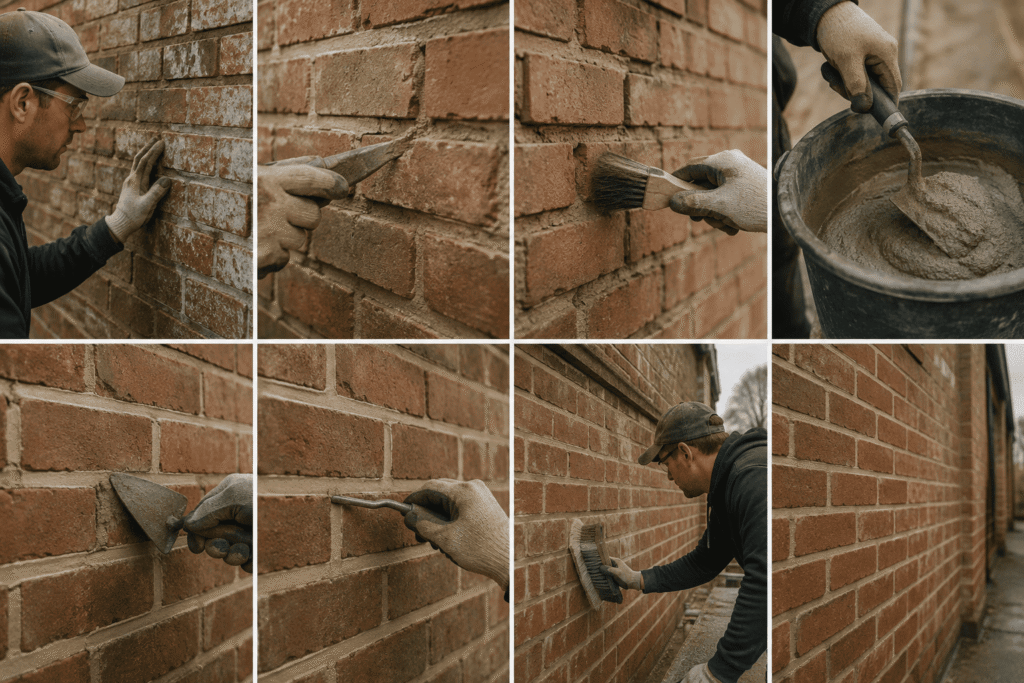
How to Repoint Brickwork With Proper Brick Pointing Methods
A search for how to repoint brickwork may make the job look easy.
Remove some old mortar, mix new mortar, put it into the gap, and smooth it.
In practice, there is much more to it.
The old joint needs to be opened to a suitable depth. The bricks should not be chipped. The joint needs to be clean, and the fresh mortar should be packed in correctly.
The chosen mortar for repointing brickwork also needs to match the building.
One of the most common mistakes is placing a thin layer of new mortar over weak existing mortar. The surface may look better for a short time, but the repair can fail because the damaged material underneath was never removed.
Another common problem is using mortar that is much harder than the original material.
Anyone trying to understand how to repoint brickwork should therefore think about compatibility, preparation, and curing rather than only the visible finish.
For a small garden wall, a homeowner with masonry experience may be able to make minor repairs. For multi-story buildings, historic façades, or large damaged areas, professional help is usually the safer choice.
Repointing Brickwork Tools
Masons use several different repointing brickwork tools depending on the condition of the wall.
Common tools include:
- Pointing trowels
- Jointing tools
- Plugging chisels
- Mortar rakes
- Masonry brushes
- Hawks
- Mixing buckets
- Mortar mixers
- Measuring tools
- Grinders where suitable
- Safety equipment
- Scaffolding or other access equipment
The exact repointing brickwork tools needed will depend on the size of the joints and how hard the old mortar is.
Power tools can sometimes make removal faster, but they must be used carefully. A grinder placed too close to a brick edge can damage the brick and make the joint wider than it should be.
Hand tools may be preferred in delicate areas.
Professional masons choose repointing brickwork tools according to the condition of the wall rather than using the same method on every project.
Choosing the Right Mortar for Repointing Brickwork
Choosing the correct mortar for repointing brickwork is one of the most important decisions in the repair.
A common mistake is assuming stronger mortar is always better.
That is not necessarily true.
Older bricks may be softer than modern bricks. If the new mortar is extremely hard, the brick may take more stress as the wall expands, contracts, and releases moisture.
A contractor may consider several factors when choosing mortar:
- Age of the building
- Existing brick type
- Original mortar
- Strength
- Flexibility
- Moisture movement
- Joint width
- Color
- Texture
- Exposure to if
The same idea applies to brickwork repair mortar.
If damaged bricks or small masonry areas need repair, the brickwork repair mortar should work properly with the existing building.
A good repair should not look like a hard patch sitting on top of older masonry.
Repointing Mortar and Tuckpointing Mortar: Are They the Same?
The terms repointing mortar and tuckpointing mortar are often mixed together.
Repointing is generally about removing damaged mortar and replacing it.
Traditional tuckpointing is more decorative. It can involve creating neat, fine lines to make masonry joints appear narrow and even.
Today, however, many people use “tuckpointing” when they really mean mortar joint repair.
This is why a contractor should inspect the wall before recommending a tuckpointing repair.
The building may actually need full repointing rather than a cosmetic treatment.
Both repointing mortar and tuckpointing mortar should be chosen to suit the brickwork.
Using the wrong tuckpointing mortar can leave a repair that looks out of place or performs poorly.
Tuckpointing Repair and Brick Pointing Techniques
A professional tuckpointing repair should blend into the rest of the masonry.
Mortar lines should look clean and consistent without large smears across the brick.
Different Brick pointing techniques may be used depending on the original wall.
These can include flush, concave, weathered, or other joint profiles.
The right style depends on the building, the existing masonry, and how the wall is exposed to weather.
On older New York buildings, appearance can be especially important. A poorly matched joint may stand out immediately against original brickwork.
Experienced masons select Brick pointing techniques that make sense for both the condition and appearance of the property.
A careful tuckpointing repair should look like part of the building rather than a patch added later.
Masonry Pointing and Pointing in Construction
Pointing in construction is the finishing of exposed mortar joints in brick, stone, or other masonry.
It is an important part of protecting the outside face of a building.
Good masonry pointing can help close deteriorated joints and reduce direct paths where rain can enter.
It can also improve the appearance of an older façade.
Common reasons for Pointing in construction include:
- Repairing damaged joints
- Improving weather resistance
- Restoring an older façade
- Protecting brick edges
- Correcting poor previous repairs
- Supporting other waterproofing work
Masonry pointing is often carried out together with brick replacement, parapet repair, façade restoration, or waterproofing.
For that reason, Pointing in construction should be viewed as part of the building envelope rather than only an appearance upgrade.
How Much Does Brick Pointing Cost in NYC?
There is no single Brick pointing cost that applies to every New York property.
Every building is different.
The price will depend on the amount of damaged mortar, building height, access, mortar type, and other repair needs.
Factors that can affect Brick pointing cost include:
- Total repair area
- Condition of the existing joints
- Depth of mortar removal
- Number of damaged bricks
- Building height
- Scaffolding
- Sidewalk protection where required
- Mortar matching
- Window details
- Parapet work
- Waterproofing needs
A small ground-level repair can cost far less than a multi-story façade project.
That is why an accurate Brick pointing cost normally requires a site inspection.
What Affects Repointing Brick Cost?
The Repointing brick cost also varies depending on the project.
Size of the Wall
A larger wall means more damaged joints need to be prepared and filled.
Condition of the Mortar
If the old mortar has deteriorated deeply, more time is required to remove it properly.
Building Access
Upper floors may require scaffolding or other access systems, which can increase the Repointing brick cost.
Brick Damage
If bricks need replacement, the project becomes more than simple repointing.
Suitable brickwork repair mortar and replacement masonry may also be required.
Mortar Matching
Older buildings can require more care when matching the existing mortar color, texture, and strength.
For this reason, two buildings with the same wall size can have very different Repointing brick cost estimates.
Brick Pointing Near Me: Choosing a Contractor in NYC
If you search Brick pointing near me, you will probably find many masonry companies.
The lowest price should not be your only concern.
A contractor should be able to explain what has failed and why.
When comparing companies after searching Brick pointing near me, consider if they:
- Inspect the bricks as well as the joints
- Remove damaged mortar properly
- Explain the repair depth
- Choose suitable mortar
- Match existing joint styles
- Protect surrounding surfaces
- Have experience with NYC masonry
- Can handle scaffolding and access
- Check related water problems
- Show examples of previous work
A good contractor should also tell you when the problem is not only mortar.
Sometimes a property needs waterproofing, brick replacement, parapet work, or another masonry repair at the same time.
Searching Brick pointing near me is only the first step. The quality of the inspection and proposed repair matters much more than distance alone.
Brick Pointing, Repointing, and Tuckpointing: What Is the Difference?
These terms can be confusing.
Brick pointing is a broad term for working on mortar joints.
Masonry repointing usually means removing damaged existing mortar and replacing it with fresh mortar.
Traditional tuckpointing is a more decorative technique, although the term is now commonly used for general joint repair as well.
If you need to repoint brick, the wall should be inspected before choosing a treatment.
Understanding what is repointing brickwork can also help you avoid paying for a simple surface patch when the joints actually need deeper repair.
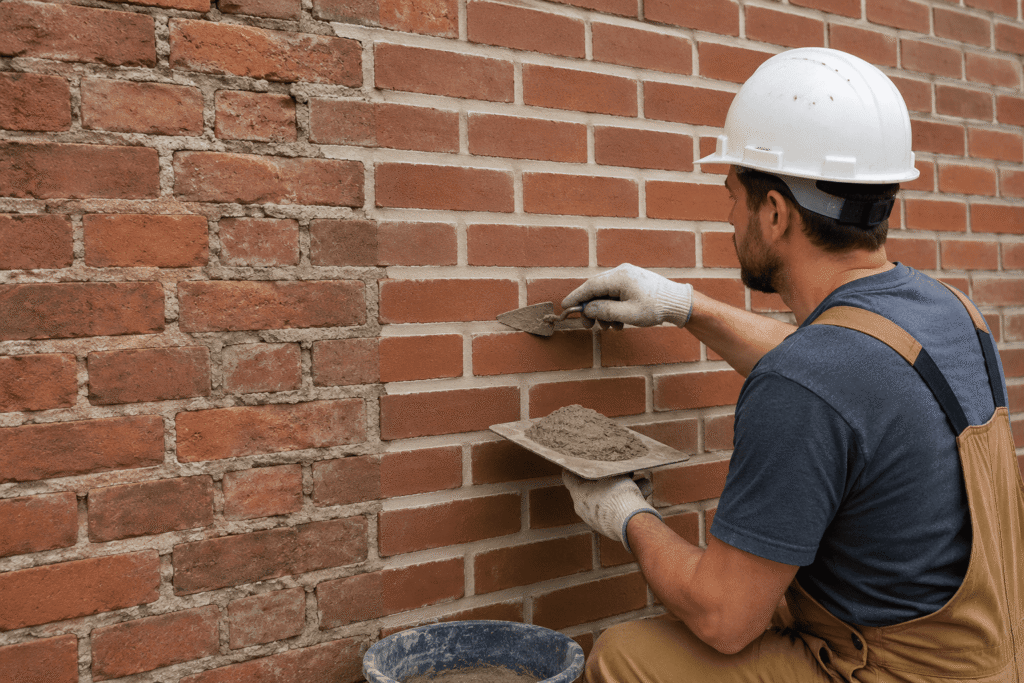
Why Timely Brick Pointing Matters
Mortar problems usually become more expensive when they are ignored.
A small open joint may allow more water into the wall. Over time, nearby mortar can weaken, bricks can become damaged, and interior moisture problems may develop.
Timely masonry repointing helps preserve masonry that is still in good condition.
When contractors repoint brick early enough, they may be able to repair the joints without replacing large areas of brick.
This is particularly important for older NYC buildings where maintaining original masonry can help preserve the character of the property.
Why Choose Innovation Construction NY?
Innovation Construction NY provides masonry and exterior restoration services for residential and commercial properties throughout New York City.
Depending on the condition of the property, the work may include:
- Brick pointing
- Brick repair
- Masonry restoration
- Brownstone restoration
- Façade repair
- Parapet repair
- Waterproofing
- Tuckpointing repair
A proper masonry inspection can help determine if you need localized pointing brick work, larger-scale repointing brickwork, or repairs to other parts of the exterior.
If you are concerned about damaged mortar, loose bricks, or water entering through a masonry wall, dealing with the issue early can prevent a much larger repair later.
Frequently Asked Questions About Brick Pointing
What is brick pointing?
What is brick pointing? It is the repair or finishing of mortar joints between bricks. Damaged or loose mortar is removed when necessary and replaced with fresh mortar. The goal is to restore the joint, improve the appearance of the wall, and help protect the masonry from weather exposure.
What is repointing brickwork?
If you are wondering what is repointing brickwork, it means removing deteriorated mortar from an existing brick wall and replacing it with new, compatible mortar. Proper repointing brickwork focuses on repairing the joint without unnecessarily damaging the bricks.
How often does brick pointing need to be done?
There is no fixed schedule. Mortar life depends on the age of the building, exposure to weather, original materials, previous repairs, drainage, and maintenance. Regular visual inspections can help identify damaged joints before they become serious.
How do I know if my brickwork needs repointing?
Signs include cracked mortar, missing joints, loose or sandy mortar, deep gaps, moisture staining, and loose bricks. If these problems appear in several areas, a professional should inspect the wall.
Can I repoint brick myself?
Small, low-level repairs may be possible for someone with masonry experience. However, knowing how to repoint brickwork correctly involves more than filling gaps. You need to remove weak mortar safely, choose compatible material, fill the joint properly, and allow it to cure. Larger façades and elevated work are better handled by trained masonry professionals.
What mortar should be used for repointing?
The right mortar for repointing brickwork depends on the age and condition of the building. The replacement mortar should be compatible with the bricks and existing mortar. Using an unnecessarily hard mortar on older masonry can sometimes cause damage.
What is the difference between repointing mortar and tuckpointing mortar?
Repointing mortar is used when damaged joints are removed and renewed. Tuckpointing mortar may be used in a more decorative joint-finishing process. In everyday use, however, the word tuckpointing is often used to describe general mortar repair.
How much does brick pointing cost in New York?
Brick pointing cost varies based on the repair area, building height, access, mortar condition, scaffolding requirements, brick damage, and the type of mortar required. A site inspection is usually necessary for an accurate estimate.
Why does repointing brick cost vary so much?
Repointing brick cost changes because every masonry wall has different conditions. A small accessible wall with shallow mortar damage requires less work than a tall façade with deeply deteriorated joints, damaged bricks, and difficult access.
What is tuckpointing repair?
A tuckpointing repair may refer to repairing damaged mortar joints or restoring a more decorative joint appearance. The correct approach depends on the building and condition of the existing mortar.
What are the main repointing brickwork tools?
Common repointing brickwork tools include pointing trowels, jointing tools, chisels, mortar rakes, masonry brushes, mixing equipment, and suitable safety gear. Professional contractors may also use controlled power tools where the masonry condition allows it.
Can brick pointing stop water leaks?
Brick pointing can help when water is entering through deteriorated mortar joints. However, not every leak comes from mortar. Roofs, flashing, parapets, windows, cracks, and other exterior areas may also need inspection.
Should all old mortar be removed?
No. During masonry repointing, contractors normally remove deteriorated mortar to a suitable depth while leaving sound material in place. Removing unnecessary mortar can increase the risk of damaging the bricks.
How long does new pointing mortar need to cure?
Curing time depends on the mortar, temperature, humidity, and weather conditions. Fresh repointing mortar should be protected from conditions that could cause it to dry too quickly, freeze, or become overly saturated.
Is brick pointing worth doing before selling a property?
It can be worthwhile when a building has visible mortar damage. Clean, properly repaired joints can improve the appearance of the façade and address obvious maintenance issues that a buyer or inspector may notice.
Get Professional Brick Pointing in NYC
Cracked mortar may look like a small exterior problem, but it should not be ignored.
Open joints can continue to deteriorate and may allow more moisture into the masonry. Repairing them at the right time can help preserve both the brick and the overall façade.
If you need pointing brick, complete repointing brickwork, a tuckpointing repair, or help selecting the right brickwork repair mortar, the first step is understanding the actual condition of the wall.
Innovation Construction NY can inspect your masonry and recommend a repair based on the condition of your property.
If you have been searching for Brick pointing near me in New York City, schedule an inspection before a small mortar problem becomes a larger masonry repair.