
Introduction
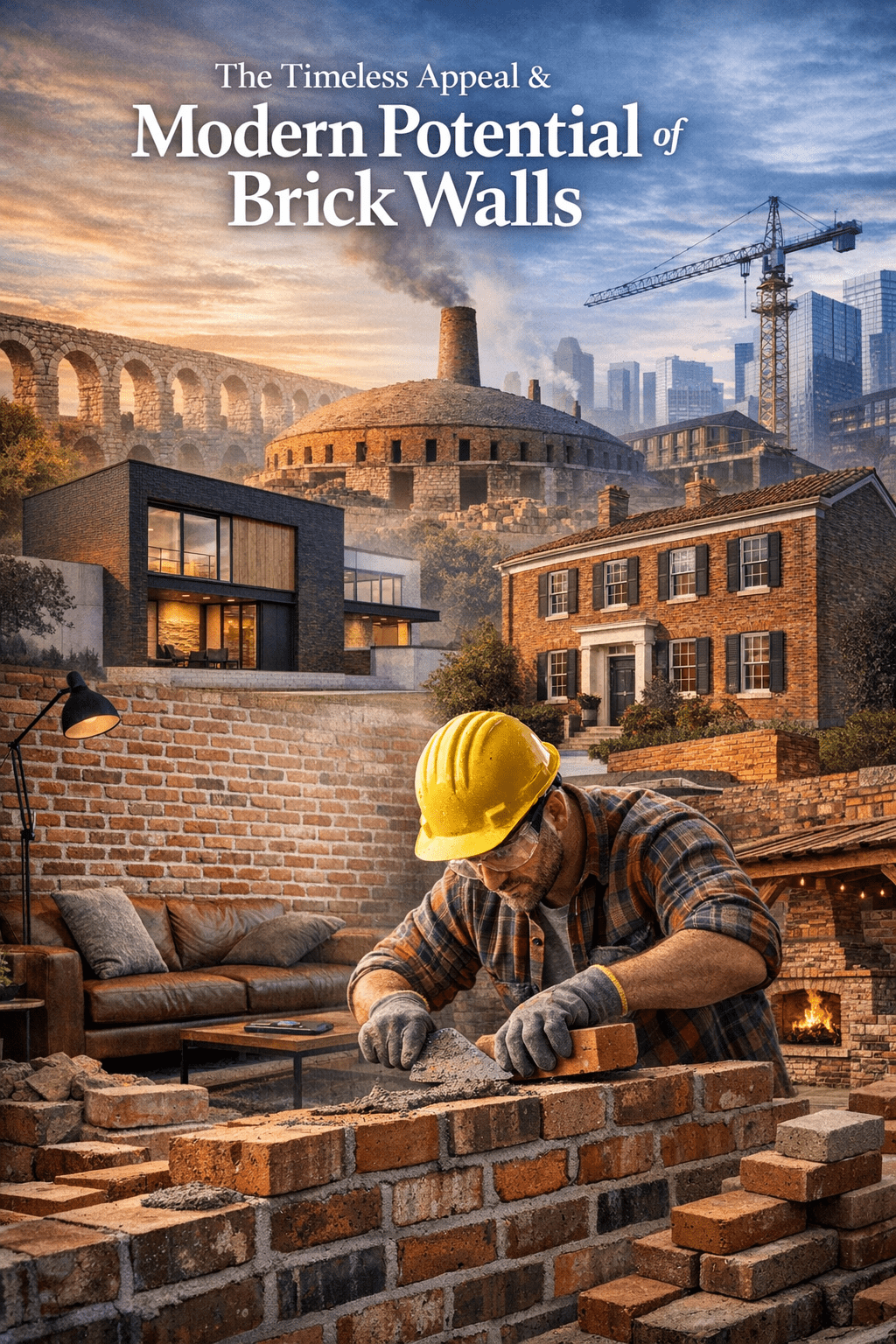
Brick walls have been an enduring element of brick architecture for centuries, evolving from early Roman bricks used in the Tigris Valley to refined European masonry traditions seen in Georgian townhouses. Today the brick wall is enjoying a renaissance as homeowners, designers and builders rediscover its warmth, texture and durability. Whether you are planning a brick building wall as part of a new construction project using modern building materials or looking to update an existing brickwork wall, there has never been a better time to explore the possibilities.
This comprehensive guide will help you understand why brick walls are so beloved, how to plan and build them using advanced masonry techniques, and the many design options available to create both Exterior Facades and interior brick masterpieces. Along the way we explore concepts like accent walls, exterior cladding, and sustainable innovations such as compressed earth blocks and Pozzolan Technology to give you a complete view of this versatile material and its role in sustainable living and green architecture.
Why Choose a Brick Wall?
Timeless beauty and tactile warmth
One of the biggest appeals of a brick wall feature is its natural beauty. From Adobe-inspired textures to sleek finishes like Aquavue glazed brick, brick offers unmatched versatility. Real fired bricks, often produced in traditional Hoffman kiln systems or advanced modern kilns, bring earthy tones, variation and texture that painted drywall can’t match.
Brick walls are perfect for accent walls in modern industrial spaces or cozy interiors inspired by Mediterranean design and Mediterranean-inspired serenity. Designers like Frank Lloyd Wright and Richard Neutra famously used brick to create harmony between nature and structure, influencing modern industrial design and contemporary homes alike.
Durability, thermal mass and efficiency
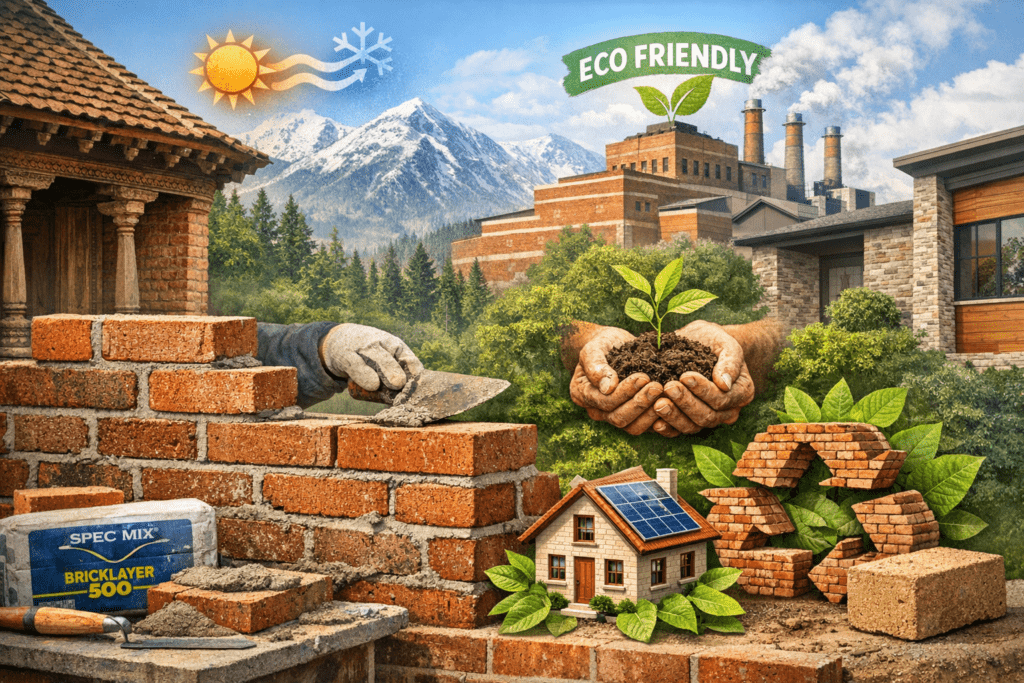
A wall brick outperforms many materials in strength and longevity. Bricks are resistant to rot, pests and weather damage. Their key advantage is thermal mass, which allows them to absorb and release heat slowly—improving indoor comfort and supporting natural ventilation strategies.
This thermal mass effect reduces energy consumption, making brick a preferred option in regions like the Pacific Northwest and beyond. When properly built with strong foundation brickwork and supported by professional-grade mixes like spec mix bricklayer 500, a brick wall can last for generations.
Sustainability and eco-conscious design
Brick is a leading material in green architecture due to its durability and recyclability. Unlike many VOC-emitting materials, bricks contribute to healthier indoor environments. Manufacturers such as Cherokee Brick, General Shale, and Hometown brick are advancing eco-friendly production methods that reduce waste generation and water usage.
Additionally, alternatives like cast stone and compressed earth blocks provide sustainable options for modern construction while maintaining traditional aesthetics rooted in vernacular craftsmanship seen in homes like Paati Veedu.
Planning and Design Considerations
Brick sizes, mortar and tools
Understanding brick sizes and mortar types is essential. Whether you are working with standard bricks or specialty products like Limestone Elevation finishes, the right selection impacts both design and performance.
Mortar application requires proper tools, including a jointing tool, to achieve clean, weather-resistant finishes. Organizations such as the Wisconsin Masonry Alliance and the Masonry Technology Foundation of Wisconsin provide guidelines on best practices in modern masonry.
Foundation and structure
Every brick wall requires a strong base. Using proper masonry techniques ensures structural integrity and longevity. For exterior projects, bricks are often used as exterior cladding, attached to structural frames with ties and anchors.
Architectural studios like Pranav Patel Design Studio and Honeybee Styling & Design often combine traditional masonry with modern engineering to create both functional and visually striking structures.
Brick patterns and heritage influence
Brick bonds are not just structural—they tell a story. From traditional English and Flemish bonds rooted in European masonry traditions to modern stack bonds used in industrial design, patterns define the wall’s character.
These styles trace back to the industrial revolution, when brick production scaled rapidly through kiln innovations, shaping cities worldwide.
Construction: How to Make a Brick Wall
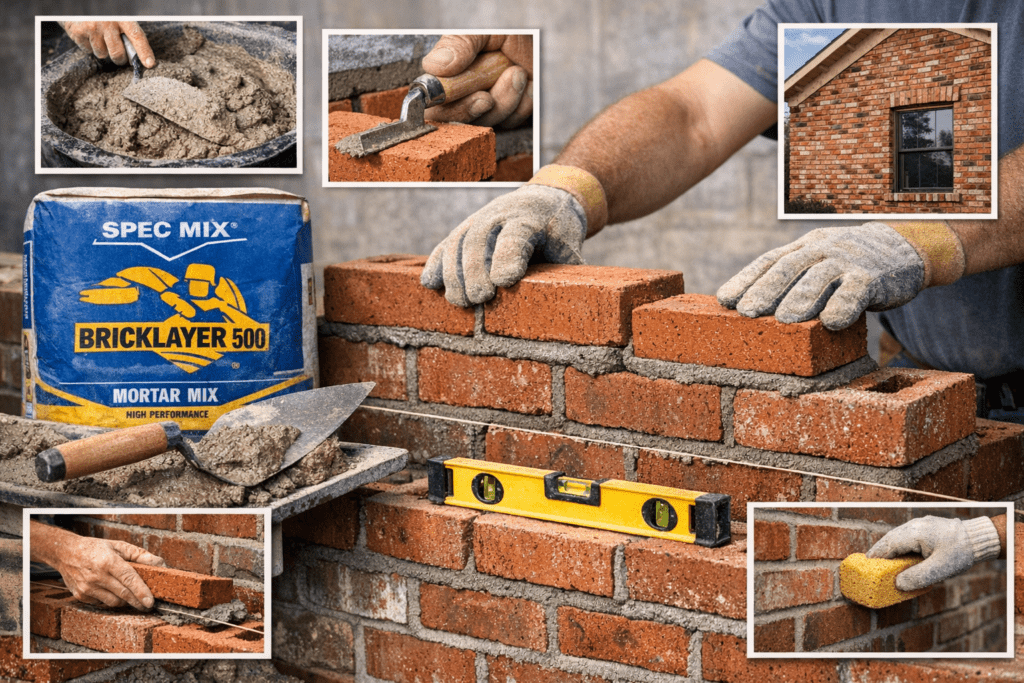
Building a brick wall today combines traditional craftsmanship with modern materials. From mixing mortar to laying courses, the process still reflects centuries-old vernacular craftsmanship.
Using quality materials like spec mix bricklayer 500 and precise tools such as a jointing tool, builders can achieve durable and aesthetically pleasing results.
Proper curing, alignment and finishing techniques ensure that the wall performs well while maintaining its visual appeal across both interior brick and Exterior Facades.
Design Ideas and Aesthetics
Interior applications
An exposed interior brick wall can transform any room into a statement space. Whether you prefer modern industrial spaces or soft, cozy interiors, brick adapts effortlessly.
Use brick for accent walls, combine it with wood or metal, or paint it for a modern look. Many designers avoid synthetic finishes and VOC-emitting materials, opting instead for breathable coatings that preserve brick’s natural properties.
Exterior applications
Brick remains a top choice for Exterior Facades due to its durability and timeless appeal. Whether used in traditional homes or modern builds, it enhances curb appeal while supporting sustainable living practices.
Combining brick with stone, wood or metal creates visually rich designs. From outdoor kitchens to retaining walls, brick blends functionality with style.
Pattern and creative textures
Designers today experiment with textures inspired by Adobe-inspired textures, combining colours and finishes to create unique walls. These designs reflect a blend of tradition and innovation, connecting ancient techniques with modern aesthetics.
Caring for and Renovating Brick Walls
Brick walls require minimal maintenance. Regular inspection and repointing help maintain structural strength. Using breathable sealants ensures moisture control without compromising the wall.
Modern renovation techniques reduce environmental impact by minimizing waste generation and water usage, aligning with sustainable building goals.
Conclusion
From ancient civilizations to modern cities, brick has remained one of the most reliable building materials. Its evolution—from fired bricks in early kilns to advanced products from brands like General Shale—demonstrates its adaptability and enduring value.
Whether used in accent walls, Exterior Facades, or innovative eco-friendly designs, brick continues to define brick architecture worldwide. By combining tradition, technology and sustainability, brick walls offer a timeless solution for anyone seeking durability, beauty and performance in modern construction.