
Brownstone facade repair is essential for preserving the beauty, safety, and value of historic New York brownstone homes. You do not buy a New York brownstone solely for space; you own a piece of the city’s architectural character. Across New York, from Brooklyn to Manhattan and beyond, these warm and elegant facades tell a story of craftsmanship, tradition, and timeless design.
However, even the kindest brownstone has issues and becomes a breach of separation split fall apart or worse. This implies that the restoration of brownstone to its original function is not purely artistic. It is an important investment in your home’s security, value, and history.
If your writing is a facade showing cracks and peeling paint or plastering — perhaps even cracked stoop surfaces, let alone stains from water damage or crumbling stone — waiting for the manuscript to be even remotely acceptable usually amounts to self-sabotage. A wee fissure today means big structural and repair trouble tomorrow.
This guide, explains why brownstones require special preservation attention, how they deteriorate, what the repair process entails and most importantly why hiring an experienced brownstone facade contractor is the best way to preserve your home.
Why Brownstone Facades Need Special Attention
Brownstone is a variety of sandstone notable for its deepest brown, red or chocolate color. It was a hit in the 19th century because it was easier to carve, and less expensive than many other construction materials.
Which poses a great problem because brownstone is soft and porous.
Brownstone is wetter, unlike granite or modern brick. It expands when water soaks into the stone and freezes in cold weather. This freeze thaw cycle causes cracking, spalling, scaling and surface delamination over time
This is why many historic homes eventually need:
- Brownstone facade restoration
- Brownstone masonry repair
- Brownstone crack repair
- Brownstone resurfacing
- Brownstone stoop repair
- Brownstone waterproofing
- Brownstone exterior repair
Problems that are identified sooner tend to be cheaper and easier to repair.
Common Signs Your Brownstone Needs Repair
Homeowners often wait until the damage becomes obvious. However, brownstone deterioration usually starts small. If you have noticed any of the signs summarized below, it might be the time to seek help from an expert in brownstone restoration work.
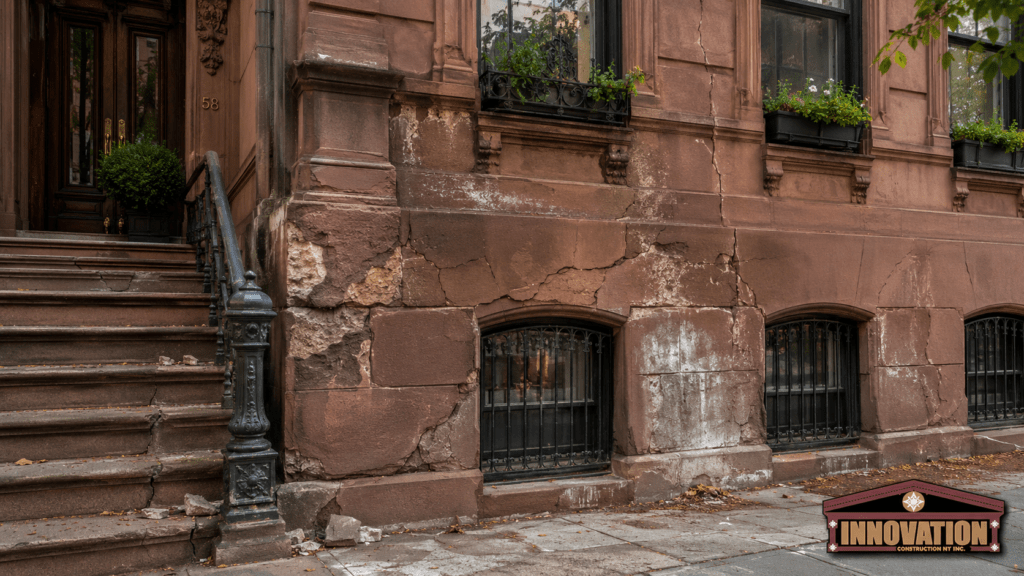
Visible Cracks
Hairline cracks may look harmless, but they allow water to enter the stone. Once moisture gets inside, it can expand, weaken the material, and cause larger cracks.
Flaking or Peeling Stone
If thin layers of brownstone are peeling away, your facade may be experiencing delamination. This is a common sign that the outer stone surface has weakened.
Crumbling Mortar Joints
Mortar joints help hold masonry together and keep water out. When mortar becomes loose or powdery, repointing may be needed as part of a complete brownstone masonry repair plan.
Stoop Damage
Brownstone stoops face heavy foot traffic, rain, snow, salt, and seasonal temperature changes. Worn steps, broken edges, and cracked surfaces often require brownstone stoop repair.
Water Stains or Efflorescence
White powdery marks, dark stains, or damp areas may indicate moisture movement inside the masonry. Do not overlook these matters, due to the fact that water is one of brownstone’s biggest enemies.
Loose or Falling Pieces
If pieces of stone are falling from the facade, this is a safety concern. Immediate professional inspection is strongly recommended.
What Causes Brownstone Deterioration?
Understanding the cause of the damage helps determine the right repair method.
1. Freeze-Thaw Damage
Water enters, freezes, expands, and split the surface of stone.This repeated cycle causes cracking, spalling, and delamination.
2. Poor Previous Repairs
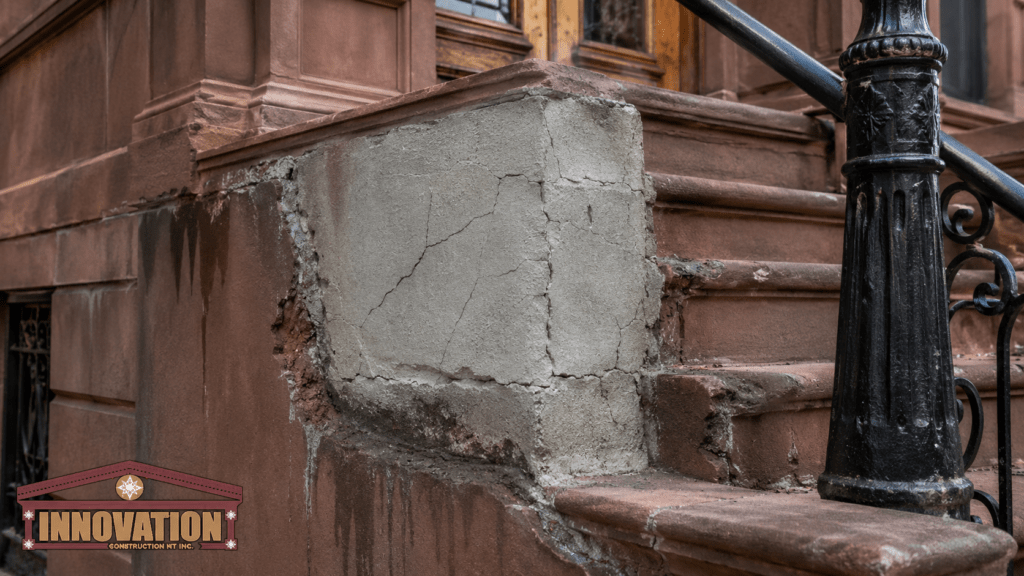
Many old brownstones were repaired with hard Portland cement or concrete. These materials are usually too rigid for historic brownstone. They trap moisture and can cause more damage over time.
3. Failed Mortar Joints
When mortar joints deteriorate, water can enter behind the facade. This weakens the stone and surrounding masonry.
4. Pollution and Dirt
New York’s urban environment exposes facades to dirt, pollution, and contaminants. Without proper cleaning and maintenance, the surface can deteriorate faster.
5. Poor Drainage
Clogged gutters, leaking downspouts, and improper grading can send water directly onto the facade or foundation. Good drainage is a major part of brownstone waterproofing.
The Brownstone Facade Repair Process
Professional brownstone facade repair requires more than patching a few cracks. A proper restoration plan protects the structure, matches the original appearance, and follows preservation standards.
Here is how the process usually works.
Step 1: Detailed Inspection and Documentation
Before any repair begins, the facade should be carefully inspected. A qualified contractor evaluates the stone, mortar joints, stoop, decorative details, cracks, and water-damaged areas.
The inspection may include:
- Checking for loose or delaminated stone
- Identifying cracks and structural movement
- Reviewing mortar joint condition
- Looking for water entry points
- Documenting historic details
- Determining whether patching or resurfacing is needed
For landmarked properties in NYC, documentation is especially important because many repairs may require approval from the Landmarks Preservation Commission.
A professional brownstone facade contractor can help you understand what type of repair is appropriate and whether permits may be needed.
Step 2: Gentle Cleaning and Surface Preparation
Cleaning is an important part of brownstone facade restoration, but it must be done carefully.
Aggressive cleaning methods can damage historic stone. Sandblasting, harsh acids, and high-pressure washing should be avoided because they can remove the protective outer surface of the brownstone.
A safer approach may include:
- Soft-bristle brushing
- Mild pH-neutral cleaning solutions
- Low-pressure rinsing
- Careful paint removal when necessary
We want to expose the condition of the stone but we do not want additional damage in the process.
Step 3: Repointer Joint That Are Cracked
Repointing consists of removing the old failing mortar and replacing it with compatible new mortar.
This step is more important than it might seem, since mortar joints are essential in order to prevent water from infiltrating the masonry wall. An extremely hard mortar will damage the more fragile brownstone. This is why most historic buildings need breathable lime based mortar for the wall to breathe.
Proper repointing supports:
- Brownstone masonry repair
- Structural facade repair
- Brownstone facade maintenance
- Long-term moisture control
- Historic facade preservation
When done correctly, repointing strengthens the facade while keeping the original character intact.
Step 4: Brownstone Crack Repair
Cracks should never be ignored. Even small cracks can let water penetrate the stone and cause deeper deterioration.
Depending on the severity of the damage, brownstone crack repair may include:
- Cleaning out loose material
- Filling cracks with compatible repair mortar
- Pinning or stitching deeper cracks
- Removing unstable stone sections
- Preparing damaged areas for patching
The repair must blend with the original stone in texture, color, and finish. Poor crack repair can stand out visually and fail quickly.
Step 5: Patching and Brownstone Resurfacing
When the stone surface is heavily worn, flaking, or delaminated, patching or resurfacing may be required.
What Is Brownstone Patching?
Patching repairs damaged sections of stone using compatible restoration materials. The contractor carefully removes loose material, prepares the surface, and applies a custom patch mix that matches the existing brownstone.
What Is Brownstone Resurfacing?
Brownstone resurfacing is used when larger areas of the facade or stoop are deteriorated. Instead of repairing only small spots, the surface is restored with a new compatible finish.
This is common for:
- Worn stoops
- Base areas
- Decorative details
- Heavily weathered facade sections
- Brownstone front repair
Good resurfacing should not look like a flat layer of cement. It should replicate the original appearance, tooling, color, and texture of historic brownstone.
Step 6: Brownstone Stoop Repair
Perhaps the quintessential feature of a New York brownstone is the stoop It also takes the most abuse from daily use, rain, snow, ice, salt, and foot traffic.
Professional brownstone stoop repair may include:
- Repairing cracked steps
- Restoring worn edges
- Resurfacing damaged treads
- Matching historic profiles
- Fixing loose or deteriorated sections
- Improving drainage around the entry
Because stoops are highly visible, the finished repair must look natural and match the rest of the facade.
Step 7: Waterproofing and Long-Term Protection
Water is the biggest enemy of brownstone. However, waterproofing does not mean sealing the facade with hard, non-breathable coatings.
Improper coatings can trap moisture inside the stone. When that moisture tries to escape, it can cause more cracking and spalling.
A smarter brownstone waterproofing plan includes:
- Repairing open cracks
- Repointing damaged mortar joints
- Keeping gutters clean
- Directing downspouts away from the building
- Using breathable materials
- Improving drainage
- Avoiding hard cement patches
The goal is simple: keep water out while allowing the historic masonry to breathe.
Why You Should Not Use Regular Concrete on Brownstone
The use of all modern concrete or hard cement patch in a brownstone repair is one of the biggest mistakes that you can make.
Concrete is more solid, but historic brownstone is often far too hard. The way brownstone absorbs water is also different from the way this material does from the concrete. The repair can crack, separate and trap moisture or destroy the host stone when incompatible materials are utilized.
Brownstone restoration contractors are experienced professionals who use period-era-appropriate materials specifically engineered for historic masonry and architectural restoration. This will ensure a more durable and natural appearance repair.
Do You Need LPC Approval for Brownstone Facade Renovation?
Many NYC brownstones are located in historic districts or may be individually landmarked. If your property falls under landmark protection, certain types of brownstone facade renovation may require approval before work begins.
This may apply to:
- Facade resurfacing
- Stoop replacement or restoration
- Decorative detail repair
- Window or lintel changes
- Major masonry work
- Exterior color or material changes
Working with an experienced contractor helps avoid violations, delays, and costly corrections.
Benefits of Professional Brownstone Facade Repair
Investing in brownstone repair services can deliver major benefits for your home.
Protects Historic Character
A proper restoration keeps your home looking authentic while preserving original architectural details.
Improves Safety
Loose, cracked, or falling stone can create safety risks for residents, visitors, and pedestrians.
Prevents Bigger Damage
Small cracks and water issues can become expensive structural problems if ignored.
Increases Property Value
A well-maintained brownstone facade improves curb appeal and can make the property more attractive to buyers.
Supports Long-Term Durability
Using compatible repair materials helps the facade perform better over time.
Reduces Moisture Problems
Proper masonry repair and waterproofing help protect interior walls, framing, and foundations from water damage.
Brownstone Facade Maintenance Tips for Homeowners
Restoration is not a one-time job. After repairs are complete, regular brownstone facade maintenance helps protect your investment.
Follow these simple maintenance steps:
Inspect the Facade Seasonally
Look for cracks, flaking, stains, loose stone, or new water marks. Photo document to track changes over time.
Clean Gutters and Downspouts
Blocked gutters can send water down the facade. Clean them biannually.
Get Water Away From The Building
At that point, guarantee downspouts discharge away from the establishment and facade.
Avoid Vines and Heavy Plants Against the Wall
Plants can trap moisture against the stone and speed up deterioration.
Do Not Paint Over Damage
Paint can hide problems and trap moisture. Repair the cause before covering the surface.
Call a Contractor Early
If you notice spalling, open cracks, or loose stone, call a professional before the issue spreads.
When Should You Call a Brownstone Facade Contractor?
You should contact a brownstone facade contractor if you notice:
- Cracks in the facade
- Flaking or peeling brownstone
- Loose mortar joints
- Water stains
- Damaged stoop steps
- Falling stone pieces
- Previous concrete patches failing
- Bowing, bulging, or shifting masonry
- Paint peeling from trapped moisture
Early action can save money and prevent more complicated repairs.
Choosing the Right Brownstone Restoration Contractor
Not all masonry contractors are able to refill. Traditional brownstone restoration and repair experts It is work that often requires an understanding of historic materials, restoration techniques, and NYC preservation standards.
Before hiring a licensed masonry contractor in NYC, ask these important questions:
- You specialize in restoring a brownstone
- You have done like brownstone in NYC What projects
- Do you understand LPC requirements?
- What materials will you use?
- Can the repair be made to match your existing color and texture?
- Can you present a precise scope of work?
- Do you do stoop repair, resurfacing, crack repair and waterproofing?
A good contractor will not just throw a band-aid on it. They will then develop a restoration plan for your brownstone building that protects your home for years.
Why Homeowners Trust Professional Brownstone Repair Services
Historic homes deserve careful work. A quick patch may look acceptable for a short time, but poor repair methods usually fail.
Professional brownstone repair services focus on:
- Long-term durability
- Historic accuracy
- Material compatibility
- Moisture control
- Safe repair methods
- Clean finishing
- Proper project planning
Your brownstone is a valuable part of New York’s history. It deserves a repair approach that respects both beauty and structure.
Ready to Restore Your Brownstone Facade?
Now is your chance if your brownstone has cracked, flaked, leaked or flat out lost its original beauty. This can allow water damage to spread and convert an easy restoration into a significant repair.
It can provide insight into the age of your facade and most effective repair for your residence.
Protect your historic property. Restore its original beauty. Preserve its value for the future.
Call Innovation Construction NY today for expert brownstone facade repair, brownstone resurfacing, stoop repair, masonry repair, and waterproofing services.
Request your brownstone inspection today and get a clear restoration plan for your home.
FAQs About Brownstone Facade Repair
How do I know if my brownstone facade needs repair?
You may need brownstone facade repair if you notice cracks, flaking stone, damaged mortar, loose pieces, water stains, or worn stoop surfaces. A professional inspection can identify whether you need patching, repointing, resurfacing, or waterproofing.
What is brownstone resurfacing?
Brownstone resurfacing is the process of restoring a damaged stone surface with compatible repair material. It is often used when the original surface has become heavily worn, delaminated, or uneven.
Can I repair brownstone with regular cement?
Regular cement or concrete is usually not recommended for historic brownstone because it can be too hard and non-breathable. It may trap moisture and cause more damage over time.
How often should brownstone facades be inspected?
Homeowners should visually inspect their brownstone at least seasonally. Professional inspections are recommended when you notice cracks, water stains, spalling, or loose mortar.
Is brownstone stoop repair different from facade repair?
Yes. Brownstone stoop repair requires special attention because stoops face heavy traffic and weather exposure. The repair must restore strength, safety, drainage, and historic appearance.
Why is waterproofing important for brownstone?
Brownstone is porous and absorbs moisture. Proper brownstone waterproofing helps reduce water penetration, prevent freeze-thaw damage, and extend the life of the facade.
Do landmarked brownstones need special approval?
Many landmarked or historic district properties in NYC require approval before exterior repairs or renovations. A qualified contractor can help guide you through the process.