
Brownstone Paint Removal — How It’s Done Properly in NYC
Brownstone Paint Removal — How It's Done Properly in NYC
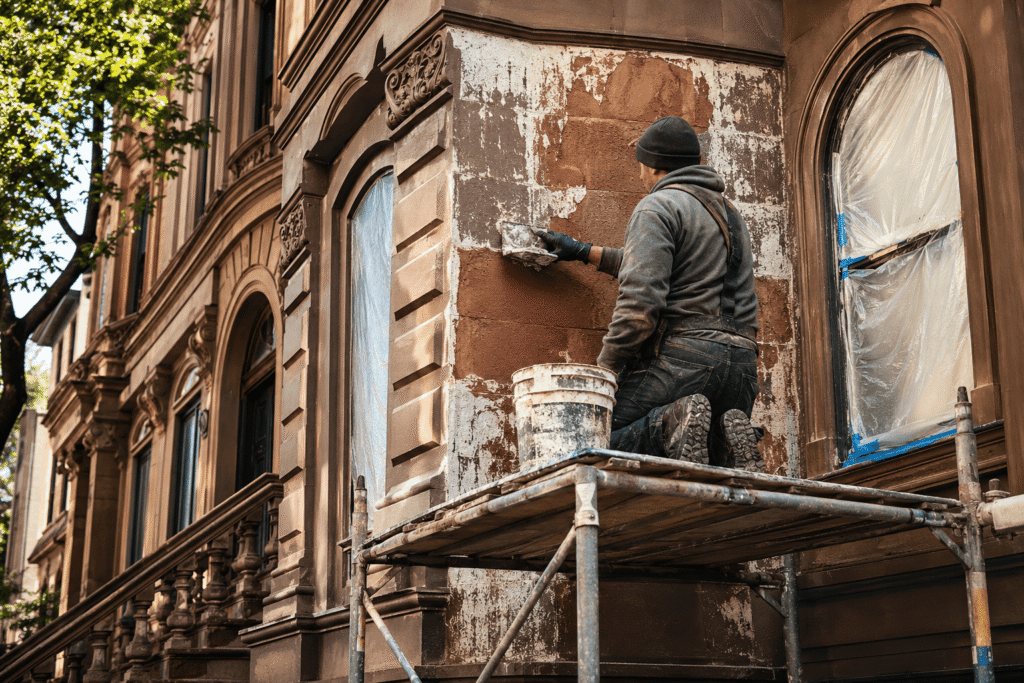
A lot of NYC brownstones were painted over the decades — sometimes as a quick fix for failing stone, sometimes as a fashion choice in the mid-20th century when historic restoration wasn’t a priority. The paint is now usually failing, peeling, or trapping moisture in the stone. Returning a painted brownstone to its original appearance is one of the most rewarding restoration projects — but it has to be done correctly. The wrong method permanently destroys the stone.
Painted brownstone evaluation — free.
📞 718-666-7679 | 212-666-5441
Why Brownstones Got Painted
The history matters because it tells you what’s under the paint:
- Asphalt-based “brownstone paint” (1940s–1970s): a tar-based coating sold as a quick fix for spalling brownstone. Looks vaguely brown when wet, ages to dull dark color. Often applied over already-failing stone, so the underlying brownstone is usually in worse shape than non-painted houses.
- Latex acrylic paint (1970s–present): applied over the asphalt coatings or directly to stone. Film-forming, traps moisture inside the stone, accelerates damage.
- Lime wash or mineral paint (older buildings): breathable historic coatings, less damaging but still alter the original appearance.
- Combinations: many buildings have multiple coatings layered over decades — different products, different failure patterns.
What Paint Removal Does and Doesn't Reveal
Honest expectation setting: stripping paint reveals what’s under it. Often that’s:
- Significantly weathered original brownstone
- Areas of prior spalling or surface damage
- Embedded sand and asphalt residue that requires further cleaning
- Failed prior patches that look bad but were hidden under the paint
Paint removal is usually step one of a larger restoration — not the entire job. You’ll see what condition the stone is in, then we restore it with color-matched compound, dutchman repair, or resurfacing as needed.
Removal Methods — What Works and What Destroys Stone
Chemical Poultice Removal (Standard Method)
A paste-form chemical stripper applied to the painted surface, covered to slow evaporation, and allowed to penetrate the paint layers. After the dwell time, the poultice is scraped off carrying the paint with it. Multiple application cycles for thick paint buildup.
Different chemistries for different paint types:
- Methylene chloride strippers — fast and effective but hazardous and increasingly restricted
- Benzyl alcohol-based strippers — slower, safer, current industry standard for most jobs
- NMP-based strippers — effective on asphalt coatings
- Alkaline strippers — for specific situations, requires careful neutralization after
Hot Water and Steam (Sometimes)
Low-pressure superheated water can soften and remove light paint coatings on sound stone. Doesn’t work on heavy buildup or on asphalt-based “brownstone paint.”
Mechanical (Limited Cases)
Hand scraping in localized areas can supplement chemical removal but doesn’t substitute for it. Aggressive mechanical removal damages the stone.
The Process
- Test patch (mandatory). 4–8 small areas tested with different products. We learn what works on your specific paint and confirm the underlying stone condition before committing to full-facade removal.
- LPC approval (if landmark district). Method approval, material specifications, and stone condition assessment.
- Site protection. Cover sidewalks, neighboring buildings, windows, vegetation. Containment for chemical runoff.
- Apply chemical stripper. Brushed or trowel-applied poultice, covered with plastic for slow penetration.
- Dwell time. 4–24 hours depending on product and paint thickness.
- Remove poultice and paint. Scrape off carrying paint with it. Multiple cycles often needed.
- Neutralize and rinse. Buffered water rinse to remove chemical residue. pH check to confirm full neutralization.
- Dry-out period. 2–6 weeks for stone to fully dry before patching.
- Assess underlying stone. What needs repair, dutchman, or resurfacing.
- Restoration work. Color-matched compound repair on damaged areas.
- Final cleaning and sealing. Light final cleaning, then breathable siloxane water repellent.
Cost
- Paint removal only (per square foot): $30–$80 per sq ft of facade
- Paint removal + full restoration (row house front facade): $80,000–$200,000+
- Paint removal + restoration (all facades of row house): $150,000–$400,000+
- Apartment building paint removal: significantly more, varies with access
Paint removal alone can equal or exceed the cost of the brownstone restoration that follows it. Budget realistically.
Paint Removal FAQs
Q: Is the underlying stone usually in restorable condition?
Usually yes, with restoration work. Stone protected by paint has often been spared decades of additional weathering, though it also accumulated water damage in some cases. The test patches we do reveal this before you commit.
Q: Can I just paint over the failing paint instead?
Possible but compounds the problem. New paint over failing paint usually fails faster. Mineral-based breathable paints can be applied responsibly over existing intact coatings, but you’re not addressing the underlying issue.
Q: Does LPC always approve paint removal?
Generally yes, when the building was historically unpainted. LPC actively encourages returning painted-over historic buildings to their original appearance. The application process documents the historic condition and proposed method.
Q: How long does the full project take?
Row house: 3–6 months from LPC approval through final sealing. Larger buildings: 6–18 months.
Q: Is paint removal disruptive to occupants?
Exterior work doesn’t require interior access. Chemical odors during application are noticeable but generally not problematic — modern strippers are less odorous than older products. We can specify low-VOC products for sensitive sites.