
Brownstone Stoop Restoration in NYC
Brownstone Stoop Restoration in NYC
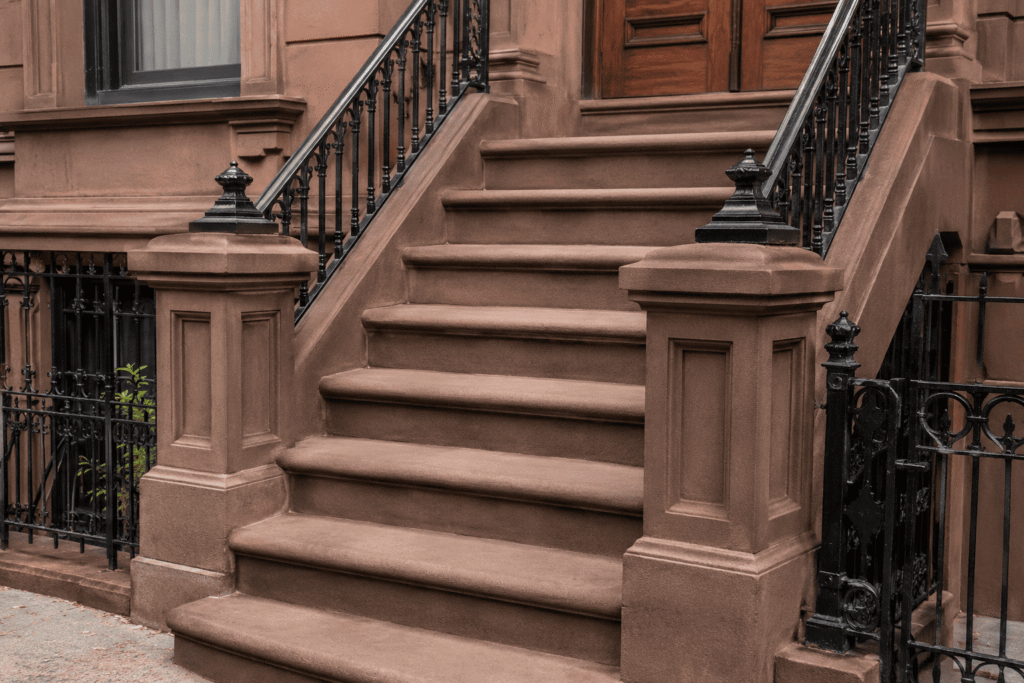
The stoop is the part of your row house that takes the worst abuse — foot traffic, de-icing salts, snow shovels, rain, freeze-thaw cycles. It’s also the most visible part of the house from the street, which is why a failed stoop tanks curb appeal faster than any other facade element. Innovation Construction NY has restored hundreds of brownstone stoops across Brooklyn and Manhattan since 1995.
Cracked, spalling, or dangerous stoop? Send a photo or have us come look. Free evaluation.
📞 718-666-7679 | 212-666-5441
What a NYC Brownstone Stoop Is Made Of
The typical NYC brownstone stoop has these elements, all of which can fail:
- Treads — the horizontal steps you walk on, originally single pieces of solid brownstone 5–7 feet long
- Risers — the vertical face between treads
- Stringers / cheek walls — the side walls flanking the steps
- Newel posts — the decorative posts at the top and bottom of the railings
- Caps and panels — decorative tops and side panels on the cheek walls
- Cast-iron railings — original to most pre-1900 stoops
- Areaway / sub-stoop area — the recessed area below and beside the stoop with its own gate and walls
A “stoop restoration” might involve any or all of these elements. The cost difference between a $10,000 job and a $35,000 job is usually scope, not pricing per element.
How Brownstone Stoops Fail
Tread Delamination
The most common failure. Original brownstone treads are layered (bedding planes), and water working its way into the layers, freezing, and expanding separates them. The top 1–2 inches of stone separates from the rest. You’ll see flaking, peeling, or whole sections of stone face coming off in sheets.
Front-Edge Spalling
The nose of each tread is the most exposed and takes the most freeze-thaw damage. Front edges round off, chip away, and eventually become trip hazards.
Failed Prior Repairs
A huge portion of our work is fixing prior bad repairs. The most common: someone resurfaced the stoop with concrete (looks gray, doesn’t match brownstone) or used bagged “brownstone-look” patching material that’s a uniform brown that doesn’t match the actual building. These fail within 2–5 years.
Cheek Wall Cracks and Bulging
Cheek walls take lateral pressure as the stoop fill behind them shifts. Wide cracks, bulging panels, and loose decorative caps are common. Some are cosmetic; some indicate the cheek wall is moving and needs rebuilding.
Loose or Missing Railings
Original cast-iron railings are bolted into the stone with embedded iron pins. The pins rust, expand, and crack the stone around them. The railing becomes loose, the stone cracks, and water gets in to make everything worse.
What Proper Stoop Restoration Looks Like
- Assessment. What’s the failure pattern? What’s been done before? What’s structural versus cosmetic?
- Remove failed material. Strip back all delaminated stone, prior bad patches, and loose mortar to sound substrate.
- Address railings. Pull the railings, remove rusted embedded pins, repair the stone where pins were, prep for reinstallation.
- Color match the compound. Mix restoration-grade brownstone compound on-site to match your building’s specific brownstone color. Test patches before committing.
- Rebuild treads. Either dutchman repair (cutting in a new piece of matched stone or compound) or full resurfacing of the entire tread.
- Rebuild risers, stringers, and decorative elements. Same compound, hand-tooled to match original texture.
- Reinstall ironwork. Restored railings re-bedded with stainless steel pins (not iron, which will rust again), set in non-shrink grout.
- Seal. After full cure (28+ days), apply a breathable siloxane sealer. Never film-forming acrylic — that traps moisture and the stoop fails again.
Cast-Iron Railing Restoration
Many NYC stoops still have their original cast-iron railings — these are LPC-protected in historic districts and shouldn’t be replaced with mild steel reproductions unless they’re irreparably damaged. We restore them in place where possible:
- Disassemble at original riveted connections, blast or hand-clean accumulated paint and rust
- Weld broken sections back together
- Re-rivet where rivets have failed (not bolt — rivets are the original method and what LPC requires)
- Prime with rust-inhibitive primer (Rust-Oleum 678 or equivalent)
- Top coat with oil-based enamel or specialized iron finish
Cost
- Small stoop (3–4 steps, minimal damage): $8,000–$15,000
- Standard stoop (5–7 steps, cheek walls, treads): $15,000–$28,000
- Full stoop with railings, newel posts, decorative caps: $25,000–$45,000
- Stoop + areaway + ironwork on a landmark district house: $35,000–$60,000+
See our cost guide for what’s included and what drives variance.
Stoop FAQs
Q: Can you do a stoop restoration in stages?
Yes — we can phase the work (treads now, railings later, areaway next year) if budget requires. Combining it all in one mobilization is cheaper per element, but phased work is workable.
Q: How long is the stoop unusable?
Usually 2–4 weeks from start to walkable. Final cure for the compound takes longer (28+ days before sealing), but you can use the stoop after the structural compound has set, typically 5–10 days into the work.
Q: Will the color exactly match my house?
Done correctly, yes. We custom-tint compound on-site, test patches against the existing facade, and adjust before committing. Bagged generic-brown compound never matches and we don’t use it.
Q: Can stoop work be done in winter?
Limited scope only. Compound and lime-based mortars need above-freezing temps to cure properly. We schedule major stoop work April through October.
Q: Should I just replace the stoop with concrete?
Almost always a bad idea, especially in landmark districts (where it requires LPC approval that often gets denied). Concrete stoops on brownstone houses look wrong, drop resale value, and fail in different ways. Proper brownstone restoration costs more upfront but is the right answer.
Send us a photo of your stoop. We’ll tell you what’s involved.
📞 718-666-7679 | ✉️ innovation.construction@yahoo.com