
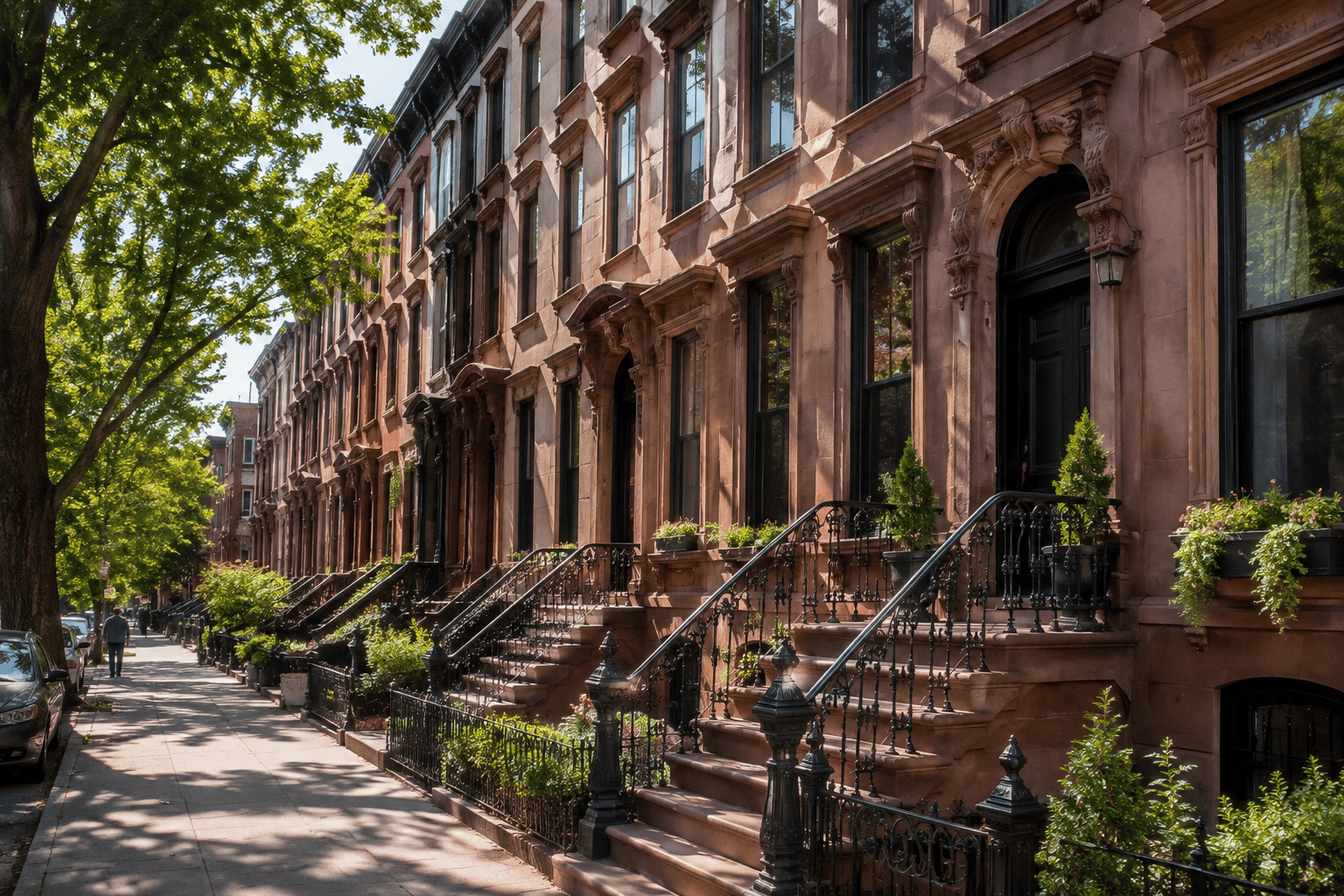
Walk through Brooklyn Heights, Park Slope, Harlem, or parts of Manhattan, and it does not take long to notice one of New York City’s most recognizable architectural features: brownstones.
These historic homes have become closely connected with the character of New York. Their warm stone facades, tall windows, front stoops, detailed cornices, and narrow multi-story layouts make them different from many modern houses. For homeowners, however, owning a brownstone house means much more than enjoying its historic appearance. Older masonry, aging mortar, water damage, interior layouts, roofing, and structural conditions can all require careful attention.
Whether you are researching a brown stone house, considering Brownstone Real Estate, or planning a Brownstone Renovation NYC project, understanding how these buildings were constructed can help you make better decisions.
This guide explains what brownstones are, where they came from, what they look like inside, common problems owners face, and what to consider before repairing or renovating one.
What Is a Brown Stone House?
One of the most common questions homeowners ask is, what is a brown stone house?
Technically, brownstone refers to a type of reddish-brown sandstone that was widely used as a building material and decorative facing. Over time, however, New Yorkers began using the word “brownstone” to describe the entire row house, even when brownstone was only used on the exterior facade.
That is why the Brownstones meaning can change slightly depending on the conversation. Someone may be talking about the actual stone, while another person may be referring to a historic townhouse.
A typical brownstone house is narrow, several stories tall, and connected or closely positioned beside neighboring homes. Many have a staircase leading from the sidewalk to an elevated main entrance. Beneath that level is often a garden or basement floor.
When people search what is a brown stone house, they are usually trying to understand this familiar NYC architectural style rather than the stone material alone.
Today, a new york brown stone may contain one large residence, several rental units, or a combination of an owner’s duplex and separate apartments.
The History of Brownstones in New York
The History of brownstones in New York is closely connected to the city’s rapid residential expansion during the 19th century.
Brownstone became popular partly because builders could create decorative exterior details from the material relatively easily. Rows of similar homes could also be constructed efficiently while still giving each property an elegant appearance.
A historic brown stone in new york often included elaborate window surrounds, carved details, decorative doorways, and a prominent front stoop.
As neighborhoods developed, rows of these homes became common throughout areas of Brooklyn and Manhattan.
Brownstones and New York Neighborhoods
Some of the best-known examples of brown stones nyc can be found in neighborhoods such as:
- Brooklyn Heights
- Park Slope
- Bedford-Stuyvesant
- Carroll Gardens
- Cobble Hill
- Fort Greene
- Clinton Hill
- Harlem
- Upper West Side
The famous Brooklyn Heights Brownstones are especially important to New York’s architectural identity. Walking through the neighborhood reveals blocks where historic facades, stoops, windows, ironwork, and cornices still define the streetscape.
A brooklyn brownstone may look similar to the house beside it, yet generations of maintenance, alterations, restorations, and additions can make the condition of each building very different.
The same is true of a manhattan brownstone. Two properties that appear almost identical from the sidewalk can have completely different structural systems and interior conditions.
What Makes NYC New York Brownstones So Distinctive?
The appeal of nyc New York Brownstones comes from a combination of architecture, craftsmanship, history, and location.
Many Brownstones NYC properties were designed before modern construction methods became standard. Their proportions and details reflect another period of city building.
Common exterior characteristics include tall windows, masonry walls, ornamental stonework, decorative cornices, iron railings, front stoops, and narrow facades.
A traditional brown stone nyc home may only occupy a relatively small width of street frontage, but its multiple floors can create substantial interior living space.
The visual consistency of connected rows is also important. A single new york brown house rarely stands completely alone. Instead, it often contributes to the character of an entire block.
That relationship between individual building and surrounding streetscape is one reason brownstones continue to attract homeowners, architects, designers, contractors, and real estate buyers.
What Do Brownstones Look Like Inside?
People sometimes imagine that Brownstones inside all have the same traditional appearance. In reality, interiors can vary dramatically.
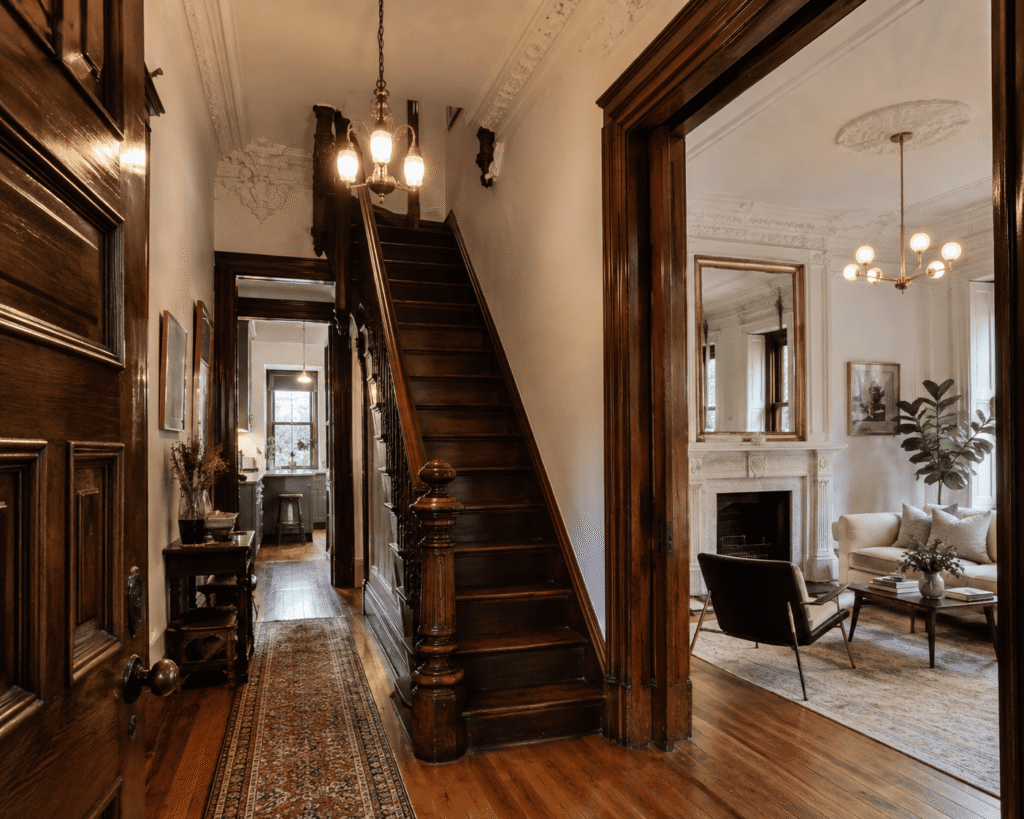
A well-preserved brownstone house may still contain original wood flooring, ceiling medallions, fireplaces, carved staircases, pocket doors, decorative moldings, and other period details.
Other Brownstones homes have been renovated several times and may now contain modern kitchens, open layouts, contemporary bathrooms, recessed lighting, updated HVAC systems, and new electrical or plumbing infrastructure.
Traditional Brownstone Layout
The classic layout of a brown stone house often includes several levels.
The parlor floor usually contains some of the most impressive architectural details and may include living and dining spaces. Upper floors traditionally contain bedrooms, while the lower garden level may contain additional living areas, storage, kitchens, or access to the backyard.
Modern owners frequently change these layouts during a Brownstone Renovation NYC project.
For example, a property that was divided into several Brownstone Apartments may be converted back into a single-family home. Another owner may keep multiple apartments while renovating the owner’s portion of the building.
The possibilities are extensive, but older structures require careful planning before walls, floors, plumbing, or structural components are changed.
Common Problems Found in NYC Brownstones
The charm of a historic brown stone new york property comes with maintenance responsibilities. Buildings that have been exposed to New York weather for well over a century may have several construction issues.
1. Deteriorating Brownstone Facades
Exterior deterioration is one of the most recognizable problems with brown stones nyc buildings.
Brownstone can experience cracking, flaking, erosion, and surface loss. Water infiltration and repeated freeze-thaw cycles can make deterioration worse.
Simply covering damaged areas with unsuitable materials may not solve the underlying problem. Proper facade repair begins with understanding why the deterioration happened.
2. Damaged Mortar Joints
Mortar between masonry units naturally deteriorates over time.
A historic brown stone in new york may require repointing when joints become cracked, loose, recessed, or washed away. Failed mortar can allow more moisture into the wall and contribute to additional masonry problems.
Using an appropriate mortar is particularly important on older construction because overly hard materials can sometimes damage softer historic masonry.
3. Water Infiltration
Water is one of the biggest threats to brownstones.
Leaks may develop around roofs, parapets, windows, doors, cornices, masonry joints, balconies, and foundation areas.
Inside the building, owners may notice peeling paint, stains, damaged plaster, musty odors, or deteriorating finishes.
Finding the actual source of moisture matters more than simply covering the visible damage.
4. Aging Roofing and Parapets
Many brownstone homes nyc have flat or low-slope roofs that are mostly hidden from street view.
Roof membranes, flashing, drains, coping stones, and parapets require regular inspection. A small roofing problem can eventually allow moisture into walls and upper floors.
Parapets also deserve attention because deterioration can create both water infiltration and safety concerns.
5. Outdated Building Systems
A new york brown stone may have gone through decades of partial renovations.
Electrical wiring, plumbing lines, boilers, heating systems, and other components may therefore be a mixture of old and newer work.
Before undertaking major interior changes, homeowners should understand the existing systems and determine what should be repaired, replaced, or preserved.
What Is Involved in Brownstone Renovation NYC?
A successful Brownstone Renovation NYC project usually requires more planning than renovating a relatively new home.
Historic architecture, neighboring structures, older building materials, limited access, permits, and existing conditions can all affect the project.
The process may include:
- Brownstone facade restoration
- Masonry repair and repointing
- Waterproofing
- Roofing repairs
- Window and door work
- Stoops and exterior stairs
- Interior demolition
- Kitchen remodeling
- Bathroom remodeling
- Flooring restoration
- Structural repairs
- Electrical improvements
- Plumbing improvements
- Painting and finishing
The exact scope depends on the condition of the property.
A brown stone nyc building with an attractive interior may mainly need exterior maintenance. Another property may require extensive structural, facade, roofing, and interior work before it functions comfortably as a modern home.
Preserve Character While Improving Performance
One of the biggest challenges in renovating nyc New York Brownstones is deciding what should remain and what should change.
Many owners want modern comfort without removing the details that made the property attractive in the first place.
Original stairs, fireplaces, molding, doors, floors, and decorative plasterwork can become focal points after restoration. Modern mechanical systems and kitchens can then be integrated around those historic elements.
That balance is often what separates a thoughtful renovation from a project that removes too much of the building’s identity.
Brooklyn Heights Brownstones and Historic Renovation
Brooklyn Heights Brownstones are among the most photographed residential buildings in the city.
The neighborhood contains many architecturally significant structures, and work on historic buildings may involve additional design and preservation considerations.
Homeowners planning alterations should determine whether their property falls within a designated historic district and whether proposed exterior work requires review or approval.
The same consideration applies to many other historic brownstones NYC neighborhoods.
For an older brooklyn brownstone, a contractor should not approach exterior masonry work the same way they would approach a newly constructed building. Existing materials, previous repairs, moisture movement, and architectural details all need to be examined.
This becomes particularly important when repairing stoops, decorative surrounds, cornices, and facade surfaces.
Brownstone Apartments vs. Single-Family Brownstones
Not every new york brown house functions as one residence.
Many buildings were divided into Brownstone Apartments at different points in their history. A four-story building, for example, may contain several independent units.
Other owners have converted multi-unit buildings back into large single-family residences.
Both arrangements have advantages.
Brownstone Apartments can provide rental opportunities and flexible living arrangements. A single-family layout may provide more privacy and greater control over the entire interior.
Renovation decisions depend heavily on how the building will be used. Converting a property can involve changes to kitchens, bathrooms, stairs, doors, fire protection, utilities, and mechanical systems.
This is another reason a Brownstone Renovation NYC project should begin with a complete understanding of the existing property.
Are Brownstones Expensive?
Are brownstones expensive? In many desirable parts of New York City, they certainly can be.
However, there is no single price for Brownstone Real Estate.
Value depends on neighborhood, square footage, width, number of floors, condition, historic features, outdoor space, renovation quality, number of units, and many other factors.
A restored property on a highly desirable Brooklyn block may command a very different price from a similar-looking building requiring substantial structural and facade work.
When looking at Brownstones for sale, buyers should therefore consider more than the listing price.
A property needing extensive exterior restoration, roofing, mechanical replacement, or interior reconstruction may require a significant additional investment.
That is why people researching Are brownstones expensive should think about both purchase price and long-term ownership costs.
What Should You Inspect Before Buying Brownstone Real Estate?
Anyone considering Brownstone Real Estate should understand the physical condition of the building before planning cosmetic improvements.
Important areas to examine include:
Facade and Masonry
Look for cracks, loose material, deteriorated joints, previous patches, bulging masonry, and areas where water may be entering.
Roof and Drainage
Check the roof membrane, flashing, drains, gutters where applicable, parapets, and roof penetrations.
Windows and Doors
Older openings can be major sources of air and water leakage.
Foundation and Basement
A new york brown house may show signs of moisture, cracking, deterioration, or previous repairs at the lower level.
Interior Structure
Floors that slope or bounce, cracked walls, altered framing, and previous renovations may justify closer evaluation.
Mechanical Systems
Electrical, plumbing, heating, cooling, and ventilation should be assessed based on their condition rather than appearance alone.
This type of evaluation is particularly valuable when comparing Brownstones for sale because two properties with similar listing photos may require very different amounts of work.
Brownstone Homes NYC: Restoration or Replacement?
Owners of brownstone homes nyc frequently face an important question: should an old feature be restored or replaced?
There is no universal answer.
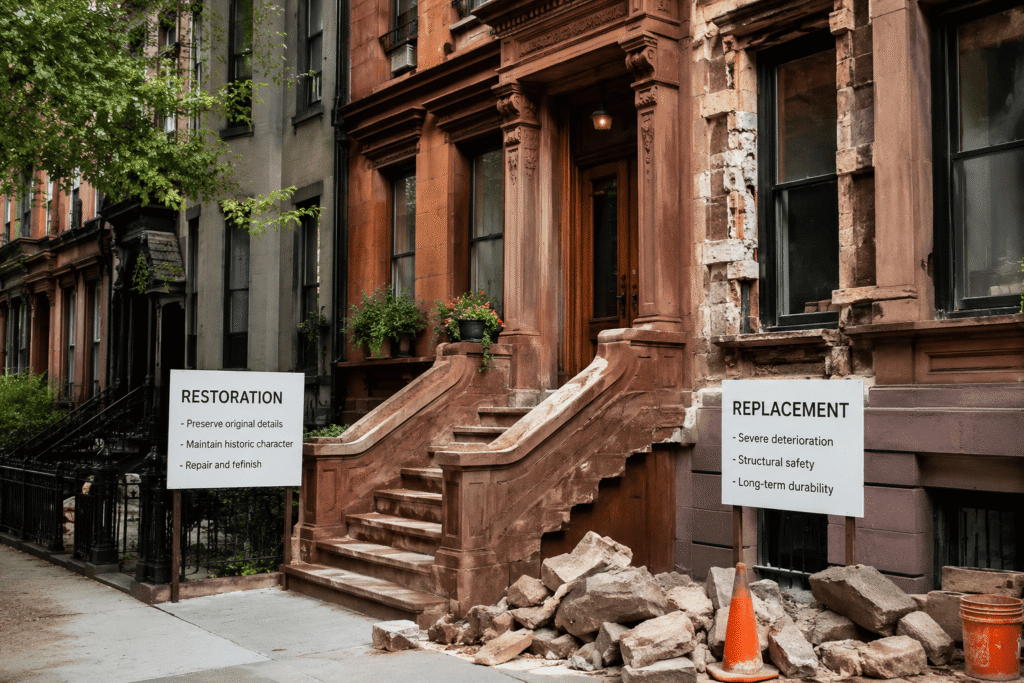
Well-preserved historic material may be worth restoring, particularly when it contributes to the home’s architectural character. Severely deteriorated materials sometimes require partial or complete replacement.
For example, original woodwork inside Brownstones homes may only need refinishing. A badly deteriorated exterior component exposed to years of water damage could require reconstruction.
The decision should consider condition, safety, durability, appearance, cost, and any preservation requirements affecting the property.
Why Experienced Construction Matters for Brownstones
Working on a brown stone new york property requires an understanding of older buildings.
A repair that looks acceptable today can still create problems later if the materials or methods are not compatible with the existing structure.
That is particularly important for exterior masonry.
A contractor working on a manhattan brownstone, brooklyn brownstone, or another historic NYC townhouse should inspect the existing conditions before recommending repairs.
For homeowners, the goal should not simply be making damaged areas look new. The work should address the source of deterioration and protect the building over the long term.
Innovation Construction NY works with New York property owners on masonry, exterior restoration, waterproofing, roofing, and related construction needs. When planning work on brownstones, a detailed inspection can help determine which areas require immediate repair and which can be maintained or restored.
How to Protect a Brownstone After Renovation
Renovating a brown stone in new york is only part of protecting the building.
Regular maintenance can help prevent small defects from becoming larger repairs.
Homeowners should periodically examine the facade, mortar joints, roof, flashing, parapets, windows, doors, stoops, and drainage systems.
After major storms or severe winter weather, it is also useful to look for new signs of moisture.
Inside Brownstones inside, stains or peeling paint should not automatically be treated as simple cosmetic issues. They may indicate water entering through another part of the building.
Early investigation can save considerable repair work later.
Brownstones Are Part of New York’s Architectural Identity
From Brooklyn Heights Brownstones to the historic streets of Harlem and Manhattan, brownstones remain one of the strongest symbols of residential New York.
Their popularity is not based only on appearance. These buildings represent craftsmanship, neighborhood history, architectural detail, and a style of city living that is difficult to reproduce in modern construction.
Whether you own a new york brown stone, live in one of the city’s Brownstone Apartments, or are exploring Brownstone Real Estate, maintaining these buildings requires respect for both their history and their physical condition.
A carefully planned Brownstone Renovation NYC project can preserve the original character while improving comfort, durability, and functionality for today’s homeowners.
For property owners dealing with masonry deterioration, exterior damage, leaks, roofing issues, or aging building components, professional evaluation is an important first step customer reviews. Proper repair does more than improve curb appeal. It helps protect one of New York City’s most recognizable building types for the years ahead.
Frequently Asked Questions About NYC Brownstones
What is a brown stone house?
If you are asking what is a brown stone house, it generally refers to a historic row house or townhouse associated with a reddish-brown sandstone facade. Today, the term is often used for the entire architectural style, even when the building contains additional masonry materials.
Where are brown stones NYC most commonly found?
Historic brown stones nyc are found throughout Brooklyn and Manhattan, with particularly recognizable streetscapes in Brooklyn Heights, Park Slope, Bedford-Stuyvesant, Fort Greene, Carroll Gardens, Cobble Hill, and Harlem.
Are brownstones expensive to renovate?
People asking Are brownstones expensive should consider the condition of the individual property. Facade restoration, structural work, roofing, waterproofing, electrical work, plumbing, and historically sensitive repairs can increase renovation costs.
Can Brownstone Apartments be converted into one home?
In some situations, Brownstone Apartments can be combined to create a larger residence, although zoning, building codes, permits, utilities, structural conditions, and other requirements must be evaluated before work begins.
What are Brownstones inside usually like?
Brownstones inside may contain high ceilings, fireplaces, decorative moldings, wood floors, original staircases, and pocket doors. Renovated properties may combine these details with modern kitchens, bathrooms, mechanical systems, and more open layouts.
What should I look for when viewing Brownstones for sale?
When considering Brownstones for sale, evaluate the facade, mortar, roof, parapets, windows, basement, drainage, structure, plumbing, electrical systems, and previous renovation work instead of judging the property only by interior finishes.
Is a Brooklyn brownstone different from a Manhattan brownstone?
A brooklyn brownstone and manhattan brownstone can share many architectural characteristics. Differences usually come from neighborhood development patterns, building dimensions, architectural era, alterations, zoning, preservation rules, and the condition of the individual property.
What does the term Brownstones meaning actually refer to?
The Brownstones meaning originally relates to the brown sandstone used on many historic facades. In everyday New York usage, however, it commonly describes the townhouse or row-house building itself.
What is the difference between Brownstones NYC and brownstone new york searches?
People searching Brownstones NYC or brownstone new york are generally looking for information about New York City’s historic brownstone buildings, neighborhoods, properties, renovations, or architecture. A search such as Brownstones coffee, by comparison, can have a completely different commercial intent and should not be confused with historic NYC housing.
Need Help With a New York Brownstone?
Owning a historic brownstone new york property means caring for a building that has already survived generations of New York weather and neighborhood change.
If your brown stone nyc property has deteriorated masonry, cracked mortar, facade damage, roofing problems, leaks, or other exterior concerns, addressing those problems early can help prevent more extensive repairs.
Innovation Construction NY can evaluate existing conditions and help property owners plan appropriate masonry, waterproofing, roofing, exterior restoration, and renovation work for New York properties.
Protecting a new york brown house is not simply about maintaining its appearance. It is about preserving the materials, structure, and architectural character that make nyc New York Brownstones such an important part of the city.