
Efflorescence on Brick Walls — What It Is and How to Fix It
Efflorescence on Brick Walls — What It Is and How to Fix It
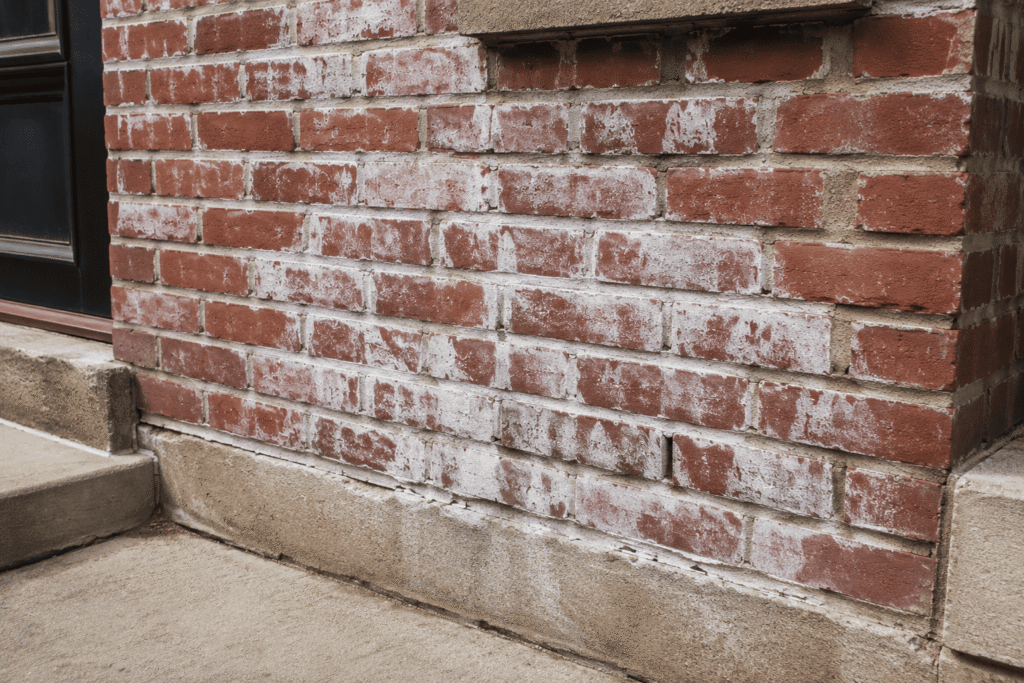
Those white powdery or crystalline deposits on your brick wall are efflorescence — water-soluble salts that have migrated through the wall and deposited on the surface as the water evaporated. Efflorescence isn’t a cosmetic issue you can scrub off and forget. It’s a symptom that water is moving through your wall, and ignoring it means whatever is causing the water movement keeps going.
Persistent efflorescence on your brick? Let’s figure out where the water’s coming from.
📞 718-666-7679
What Efflorescence Is
Brick, mortar, and concrete all contain small amounts of soluble salts — sodium sulfate, calcium sulfate, magnesium sulfate, potassium nitrate. These salts are normally stable inside the masonry. When water enters the wall, it dissolves these salts and carries them through the material. When the water reaches the exterior surface and evaporates, the dissolved salts are left behind as visible crystalline deposits.
The deposits are usually white, but can be yellow, brown, or green depending on the specific salts and any reactions with the masonry. The visual: powdery white film, crystalline crusts, or sometimes thick salt deposits that look almost like mortar splatter.
Where Water Is Coming From
Efflorescence is always a water problem. The salts are coming from somewhere and being deposited where you see them. Common sources:
Failed Mortar Joints
Water enters through failed joints, dissolves salts in the mortar and brick, and evaporates on the exterior face. Most common cause.
Capillary Rise From Foundation
Water rises through the wall from below grade — failed foundation waterproofing, missing damp-proof course, or grade conditions causing chronic moisture at the base of the wall. Efflorescence appears at the lower courses.
Roof and Parapet Failures
Water entering at the parapet or roof edge runs down inside the wall. Efflorescence appears at lower levels, often dramatically.
Window and Lintel Leaks
Water entering around windows or above failed lintels. Efflorescence appears below the entry point.
Through-Wall Penetrations
Anything that penetrates the wall (HVAC, plumbing, signage, anchors) and isn’t properly flashed and sealed.
New Construction Bloom
Newly built or rebuilt masonry walls often show efflorescence in the first year as initial mortar moisture leaves the wall. This is normal and dissipates. Persistent efflorescence after a few years is a problem.
Primary vs Secondary Efflorescence
The distinction matters because the fixes differ:
- Primary efflorescence: from the initial water of construction. Appears on new walls. Goes away on its own within 1–2 years.
- Secondary efflorescence: from ongoing water infiltration. Doesn’t go away because the water source is still active. Indicates an active problem.
If your efflorescence is on a building more than 5 years old, it’s secondary and there’s an active water source.
What NOT to Do
Don't Apply a Sealer Over Efflorescent Brick
This is the #1 wrong move. Sealing efflorescent brick traps the salts and water inside the wall. Pressure builds. Brick face spalls from inside out. The problem gets significantly worse and the sealer can’t be removed without further damage.
Don't Use Strong Acid
Hydrochloric acid (muriatic) removes efflorescence visually but can also etch the brick surface and create new salt deposits as a reaction byproduct. Wrong tool for the job.
Don't Just Scrub It Off Repeatedly
Cosmetic removal doesn’t address the water source. The efflorescence comes back.
Proper Approach
- Diagnose the water source. Where is water entering the wall? This is the actual problem — efflorescence is just the visible symptom.
- Address the water source. Repoint failed joints, replace failed lintels, fix the parapet, address foundation moisture — whatever’s causing the water movement.
- Let the wall dry out. After fixing the water source, the wall needs weeks to months to fully dry. Efflorescence may worsen briefly as remaining moisture continues to migrate out.
- Remove the existing efflorescence. Stiff-bristle brushing (dry), then if needed light water rinse, or proprietary efflorescence removers designed not to damage masonry. Multiple passes.
- Apply breathable water repellent (optional). After full dry-out and removal, breathable siloxane repellent reduces future water entry without trapping moisture. Apply only after wall is fully dry.
Cost
- Diagnosis visit: free
- Efflorescence removal (per sq ft): $4–$12 per sq ft
- Underlying water source repair: varies widely — could be $1,500 (small repointing) to $50,000+ (parapet rebuild)
- Breathable repellent application: $2–$5 per sq ft
The removal itself is cheap. The water source repair is what matters.
FAQs
Q: My building is new and has efflorescence. Is that normal?
Within the first 1–2 years, yes — initial construction moisture leaves the wall. After year 2, it’s an ongoing problem and needs investigation.
Q: The efflorescence is only on my interior wall — does that mean it’s from inside?
Usually not. Interior efflorescence means water has come through the wall and evaporated on the interior face. The source is still exterior — wall leak, foundation moisture, or roof-down water path. Different from condensation, which doesn’t leave salts.
Q: Can I just paint over it?
The paint will peel within months as the salts continue to deposit underneath it and as moisture continues to move through the wall. Painting masks the symptom briefly while making the underlying problem worse.
Q: Will efflorescence damage the brick?
Over time, yes. The crystallization pressure of salt deposits forming inside the brick (not just on the surface) causes spalling and surface damage. The water that’s carrying the salts also accelerates other damage modes. Address it.
Q: How long does proper repair take?
Diagnosing the source: one visit. Repairing the source: days to weeks depending on what it is. Letting the wall dry and removing the existing efflorescence: 4–12 weeks. Total: 2–4 months for full resolution.