
Keeping the lowest level of your home dry isn’t just about comfort; it preserves structural integrity, prevents mold and mildew, and protects property value. Exterior basement waterproofing tackles water intrusion at its source by sealing the outside of the foundation and diverting water before it reaches the interior. Unlike interior systems that manage water after it enters, waterproofing a basement exterior works from the soil side of the wall. This comprehensive guide breaks down how the system works, why it is often the best long‑term solution, and when a homeowner might consider it.
Exterior Basement Waterproofing: Protect Your Home from Water Damage
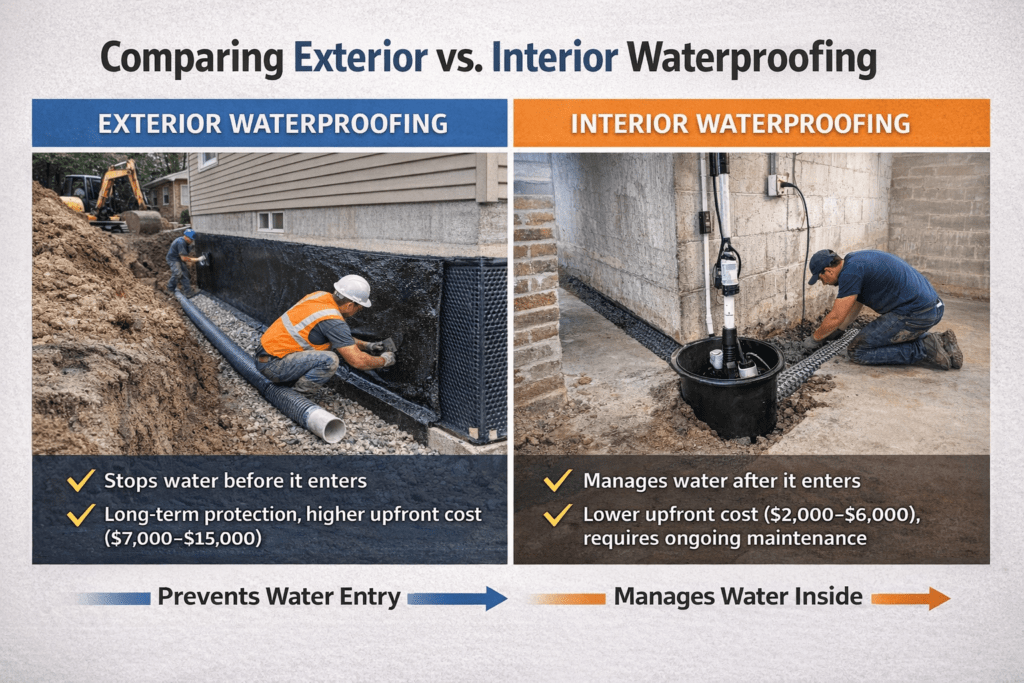
From a first‑principles perspective, water follows gravity and paths of least resistance. As rain or groundwater accumulates against your foundation, hydrostatic pressure forces water through cracks and porous concrete. Interior drains and sump pumps manage moisture once it gets inside, but exterior waterproofing for basements prevents that pressure from building up in the first place. According to pricing data from This Old House, exterior basement waterproofing projects often involve excavation and can cost between $7,000 and $15,000 for a standard basement, while interior fixes average $3,000. The higher upfront cost yields decades of protection with minimal maintenance.
Waterproofing the foundation from outside therefore isn’t a cosmetic upgrade; it’s a strategic investment. If your home sits in a region with a high water table, heavy clay soils, or inadequate grading, an exterior solution addresses the underlying forces driving leaks. The approach also avoids the after‑the‑fact reliance on pumps and basins that can fail during storms. However, cost and disruption are real constraints. Excavating around a structure means tearing up landscaping, patios, or driveways and might require heavy machinery. We’ll explore methods, costs and DIY considerations to help you decide.
Understanding Exterior Basement Waterproofing Systems
Exterior Basement Membranes and Drainage Systems
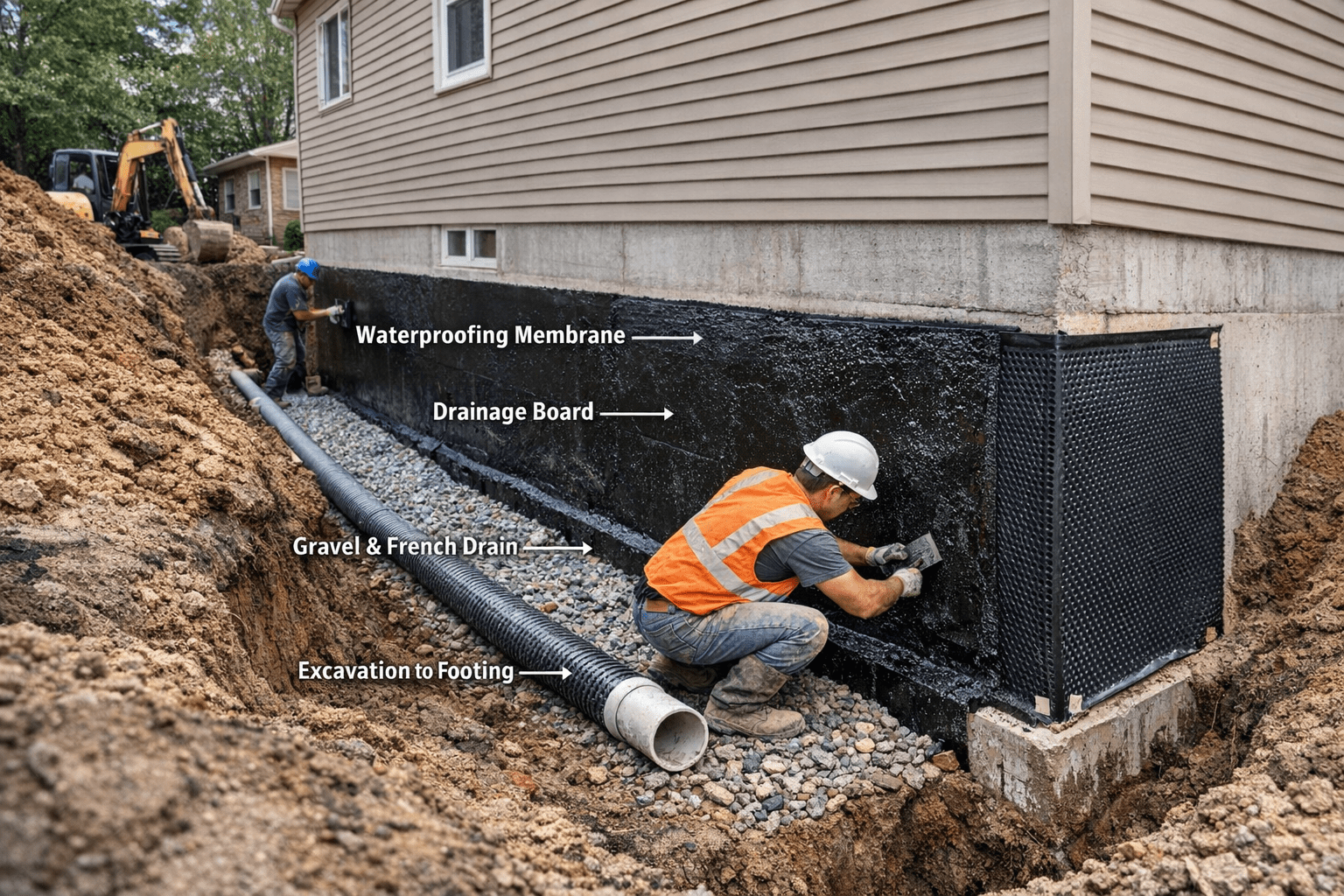
The most thorough approach involves excavating down to the footing and exposing the entire foundation wall. Contractors clean the wall, repair cracks, apply an exterior basement waterproofing membrane and install a drainage layer. Digging around your home costs $50–$200 per cubic yard and can take one to two weeks, but the resulting barrier lasts for decades. The membrane—a thick elastomeric coating—creates a continuous foundation water barrier, while a dimpled drain board channels water down to a French drain at the footing.
This system might include:
- Waterproof foundation walls (also called exterior foundation wall waterproofing) using liquid coatings, sheet membranes or foundation wall waterproofing membranes.
- Exterior drainage systems such as perforated pipes surrounded by gravel (French drains) that route water away from the footing. These pipes tie into a storm sewer or daylight out on a slope.
- Perimeter waterproofing that incorporates gutters and downspout extensions to move roof water well away from the foundation.
The result is a multi‑layer defense: the soil stays separated from the wall, water drains freely away, and the membrane prevents seepage.
Interior vs. Exterior Basement Waterproofing Solutions
In new construction, builders often apply an exterior foundation coating—a spray‑on asphalt emulsion or polymer modified bitumen—to damp‑proof the concrete. Some coatings simply resist moisture; others create a true basement waterproofing membrane when combined with drainage matting. High‑performing systems include adhesives strong enough to remain attached when soil shifts. Using the right materials matters; experts at Blue Umbrella Waterproofing stress that hardware‑store paints marketed for waterproofing exterior basement walls rarely provide lasting protection and can actually trap moisture, increasing hydrostatic pressure.
Exterior Basement Waterproofing Costs and ROI
A critical component of exterior waterproofing basement systems is a properly sloped French drain around the perimeter. Perforated piping sits beside the footing and collects water from the soil, then discharges it away from the structure. Without a reliable drain, even the best membrane might fail. Professional installation ensures the pipe slope is adequate and prevents clogs, but homeowners can maintain performance by keeping downspouts clear and grading soil away from the house.
Exterior Foundation Waterproofing Best Practices
Although basement outside waterproofing stops most water before it reaches the walls, additional measures improve effectiveness:
- Install gutters and downspout extensions to carry roof runoff several feet away from the foundation.
- Ensure proper grading around the home; soil should slope at least 6 inches over the first 10 feet.
- Seal windows and window wells; installing drains in window wells prevents local flooding.
- Maintain the French drain by clearing debris around exit pipes.
When these measures accompany an exterior system, the basement remains dry and usable.
Cost Analysis and Return on Investment
Signs You Need Exterior Basement Waterproofing
Costs vary widely because each home’s conditions differ. The average exterior basement waterproofing cost runs $7,000–$15,000, but excavation depth, soil type, and foundation material drive price. Excavation in clay soils costs more due to slower digging, while poured concrete foundations are easier to seal than block walls. Labor is significant; Angi reports that contractor rates average around $200 per hour. Additional expenses include:
- Foundation crack repair (epoxy injections) at $800–$1,500 per crack.
- French drain installation costing $10–$100 per linear foot.
- Membrane and drainage board materials at $3–$6 per square foot for liquid membranes or $1,500–$3,000 for sheet systems.
- Restoration of landscaping, patios, or driveways after excavation.
Comparing quotes from several waterproofing contractors is essential. Some companies include warranties; Blue Umbrella notes that interior systems often carry lifetime warranties while exterior coatings may degrade over time.
Long‑Term Value
From a strategic perspective, the question isn’t just initial expense but total cost of ownership. Moisture damage leads to mold remediation costing $500–$3,500, foundation repairs that can exceed $25,000, and decreased property values. A high‑quality foundation waterproofing system eliminates those future liabilities. Exterior waterproofing also improves energy efficiency; by keeping the basement dry, dehumidifiers run less and heating/cooling costs drop.
Comparing Exterior vs. Interior Waterproofing
Interior solutions such as drain tile systems and sump pumps average $2,000–$6,000 and address water that has already entered. They are less disruptive and cheaper initially, which may appeal to homeowners on tight budgets. Yet these systems require ongoing maintenance; pumps can fail during power outages. Exterior methods provide long‑term peace of mind by preventing water entry.
The choice should align with your risk tolerance and time horizon. If you plan to stay in your home for decades, investing in exterior basement waterproofing pays dividends. If you’re preparing to sell soon, a combination of minor foundation damp proofing and interior drainage might be sufficient. However, ignoring water intrusion altogether is rarely wise, as small leaks can evolve into structural damage.
DIY vs. Professional Installation
Can Homeowners Do It Themselves?
Enthusiastic DIYers may wonder whether exterior basement waterproofing do it yourself is realistic. While tasks like clearing gutters, installing downspout extensions, or applying waterproof paint qualify as foundation waterproofing DIY projects, anything requiring excavation or concrete work is risky. This Old House cautions that serious waterproofing projects involving drainage systems and electric sump pumps demand specialized equipment and proper slope calculations; mistakes can create larger problems. Blue Umbrella warns that off‑the‑shelf coatings and paints often trap moisture and lead to structural damage. In short, homeowners can handle surface‑level measures and maintenance, but full basement exterior sealing is best left to certified professionals.
Selecting a Contractor
When hiring waterproofing contractors, verify licenses, insurance, and warranties. Request references and inspect previous jobs. Consider companies that offer both interior and exterior solutions to get balanced recommendations. Beware of quotes that seem too good to be true; inadequate materials can cause premature failure. Finally, ensure the contractor includes restoration of landscaping and provides clear terms on how the drainage system will be maintained.
Signs You Need Exterior Waterproofing
Before investing in any system, assess whether your situation warrants an exterior approach. Indicators include:
- Persistent dampness or standing water after storms even with functioning gutters.
- Efflorescence or mold growth on interior walls.
- Cracking or bowing foundation walls.
- A musty smell or high humidity in the basement.
- Water infiltration despite interior drainage systems.
The presence of a high water table or heavy clay soils in your region also tilts the equation toward below‑grade waterproofing from the outside.
Best Practices and Actionable Steps
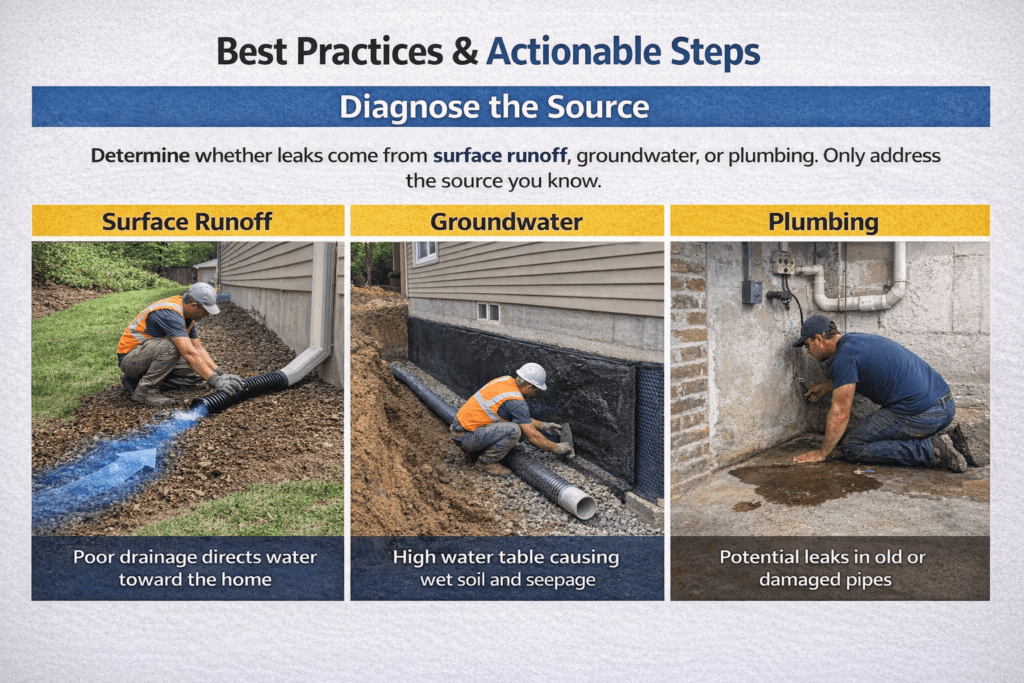
- Diagnose the Source: Determine whether leaks come from surface runoff, groundwater, or plumbing. Only address the source you know.
- Optimize Exterior Drainage: Grade soil away from the foundation, maintain gutters, and extend downspouts. Even the best membrane can fail if water continues to pool near the footing.
- Start with Critical Repairs: Fix structural cracks and install proper drainage. Do not rely on paint or sealant alone.
- Get Multiple Opinions: Consult at least three contractors and request detailed proposals including materials, labor, warranties, and restoration.
- Plan for Disruption: Excavation is messy. Prepare for noise, dust, and yard restoration. If you have patios or utilities near the foundation, factor relocation costs.
- Budget Realistically: Set aside contingency funds for unexpected issues like hidden foundation damage or soil conditions.
- Combine Solutions: The best way to waterproof basement walls may involve both exterior and interior methods—using exterior membranes to keep water out and interior drains with a sump pump as backup.
FAQ
Q: What is the difference between basement exterior waterproofing and exterior waterproofing for basement?
A: Both terms describe preventing water intrusion by sealing the outside of the foundation. Basement exterior waterproofing emphasizes treating the basement walls, while exterior waterproofing for basement highlights the system installed outside. Both involve membranes, drains, and surface grading.
Q: How does waterproofing exterior basement walls compare to interior systems?
Exterior methods stop water infiltration before it enters, offering long-term protection. Interior systems manage water infiltration after it infiltrates, providing immediate relief but requiring maintenance.
Q: What is the role of a basement waterproofing membrane?
A basement waterproofing membrane is a continuous coating or sheet applied to the outside of foundation walls. It acts as a foundation water barrier and works in tandem with exterior drainage systems like French drains, complementing interior waterproofing systems.
Q: Is there an exterior basement coating I can apply myself?
Hardware-store coatings are generally damp-proofing products and not true exterior basement coating. Professional-grade membranes require proper surface preparation and are usually installed by contractors to help prevent mold growth.
Q: Does foundation waterproofing DIY save money?
Homeowners can perform minor tasks (gutter cleaning, grading, applying interior sealants) but should hire professionals for full exterior foundation sealing or foundation damp proofing because mistakes can be costly.
Keyword Glossary and Search Variations
The following list collects common phrases homeowners use when researching basement moisture issues and water damage. Each term refers to solutions that protect foundations from outside water pressure:
- Basement exterior waterproofing – sealing the outside of the basement wall.
- Waterproofing a basement exterior – a long‑tail variation for the same concept.
- Exterior basement waterproofing cost – the price range of $7,000–$15,000, including vapor barriers.
- Exterior basement waterproofing near me – a local search to find waterproofing contractors.
- Basement waterproofing exterior – another phrase for outside sealing.
- Waterproofing exterior basement walls – describes applying membranes, coatings, and vapor barriers.
- Exterior waterproofing basement – a shorter variation including sump pump installations..
- Exterior basement waterproofing do it yourself – implies homeowners seeking DIY solutions but should be cautious.
- Waterproofing foundation from outside – general description of the process.
- Basement outside – shorthand for external parts of the basement to be treated.
- Best way to waterproof basement walls – usually involves a combination of exterior membrane and drainage.
- Exterior foundation wall waterproofing – sealing the foundation wall to block moisture.
- Exterior waterproofing – broad term including basements, crawl spaces and foundations.
- Foundation wall waterproofing membrane – the primary component of exterior systems.
- Foundation waterproofing DIY – cautionary phrase; minor tasks can be DIY, major ones should not.
- Basement waterproofing solutions – covers interior and exterior options, including crack injection.
- Foundation waterproofing – general term for keeping foundations dry, including interior basement waterproofing.
- Exterior foundation sealing – applying a protective barrier on the foundation as part of interior basement waterproofing.
- Basement leak prevention – includes grading, gutters, and membranes to prevent water seepage.
- Below‑grade waterproofing – protecting any structure below ground level from water seepage.
- Exterior foundation coating – material used for damp-proofing or waterproofing to address moisture problems.
- Basement moisture protection – strategies to control humidity and water ingress to prevent moisture problems.
- Foundation damp proofing – lesser form of waterproofing that resists moisture but not hydrostatic pressure, often reinforced with hydraulic cement.
- Basement exterior sealing – another term for exterior waterproofing using hydraulic cement.
- Foundation water barrier – the membrane or coating preventing seepage for foundation repair.
- Perimeter waterproofing – drainage and barriers around the entire structure for foundation repair.
- Exterior basement drainage – French drains and pipes that move water away from foundation cracks.
- Waterproof foundation walls – the result of combining membranes with proper drainage on exterior walls.
- Exterior basement membrane – the dimpled or sheet material installed outside, used in various waterproofing techniques.
- Foundation waterproofing system – integrated solution combining waterproof coating, membranes, drains, and grading.
By understanding these terms and the science behind them, homeowners can make informed decisions and avoid ineffective, cosmetic fixes that may lead to water damage. Exterior basement waterproofing may not be the cheapest route, but it delivers lasting peace of mind, safeguards your home’s value, and eliminates the root causes of basement leaks and water damage. As with any major project, perform due diligence, consult experts, and weigh long-term benefits against upfront costs.