
Greenwich Village & West Village Row House Restoration
Greenwich Village & West Village Row House Restoration
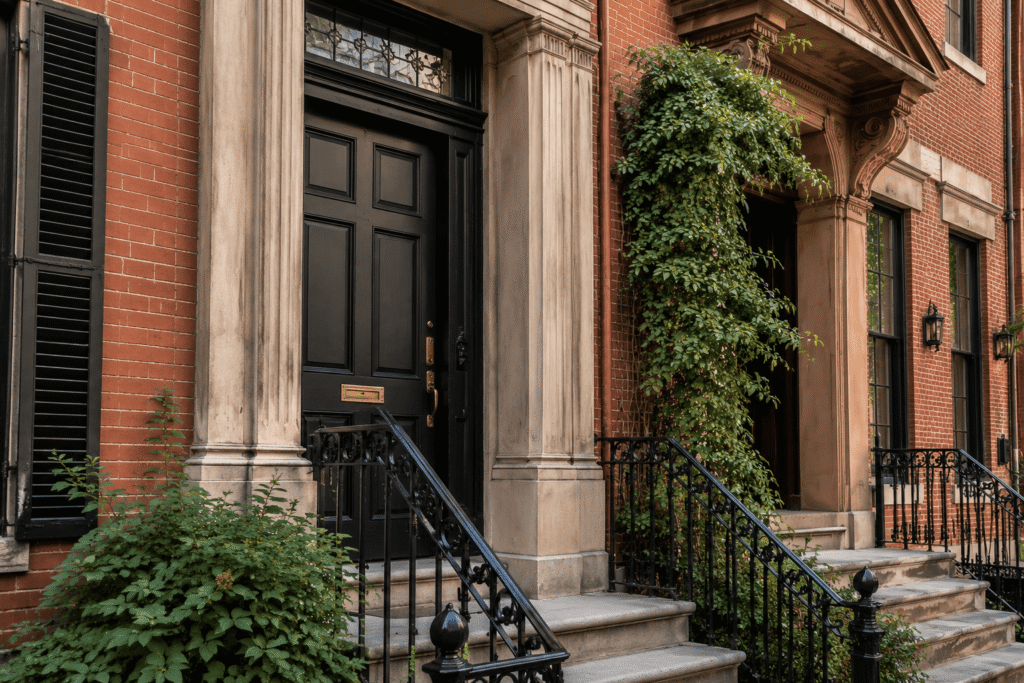
Greenwich Village has the oldest concentration of row houses in NYC — many dating from the 1820s and 1830s, making them roughly 50 years older than the Park Slope or Bed-Stuy housing stock most contractors are used to. The materials, construction methods, and restoration approaches for these Federal and Greek Revival houses are different. Innovation Construction NY does the lime-mortar repointing and Federal-era restoration work these buildings require.
Village townhouse evaluation — free.
📞 212-666-5441
Village Historic Districts
- Greenwich Village Historic District (designated 1969, multiple extensions) — covers most of the area between 14th Street and Houston Street, river to Sixth Avenue
- Weehawken Street Historic District (2006) — small block-level district
- Gansevoort Market Historic District (2003) — Meatpacking area
- South Village Historic District (designated 2013) — south of Houston Street
- Sullivan-Thompson Historic District (designated 2016)
The Village has more LPC-designated area than any other Manhattan neighborhood. Working here without LPC fluency is not viable.
Why Village Restoration Is Different
Federal-Era Buildings (1820s–1830s)
Many Village row houses pre-date the common use of Portland cement (which arrived in NYC in the 1870s). These buildings were built with:
- Pure lime mortar mixed with sand — soft, slow-curing, takes a year or more to fully harden
- Handmade brick from local clay, fired at relatively low temperatures, soft compared to modern brick
- Stone foundations often laid with lime mortar, sometimes dry-laid below grade
- Wood structural elements integrated into masonry walls in ways that don’t appear in later buildings
Critical: Federal-era brick repointed with Portland-based mortar will fail. The harder mortar traps moisture in the soft handmade brick, freeze-thaw cycles spall the brick face, and within 5–10 winters the building is in worse shape than before the repointing. Pure lime or lime-rich Type O mortar is the only correct material.
Greek Revival Buildings (1830s–1850s)
Greek Revival houses introduced more stone trim — pilasters, lintels, sills, projecting cornices — but still used lime-based mortars. Restoration uses the same materials approach as Federal-era buildings but with more stone detail work.
Italianate Buildings (1850s–1870s)
Italianate brownstones in the Village are similar to those in Brooklyn neighborhoods but often on much smaller lots and with more elaborate detail because of higher original construction budgets.
Painted Brick
Many Village houses have been painted (often multiple times) over the past century. Removing paint to return to original brick requires LPC approval and is a significant project — chemical poultice systems applied in stages, never sandblasting (which destroys soft Federal-era brick).
Common Village Restoration Work
- Federal-era brick repointing with pure lime mortar
- Greek Revival stone trim restoration (pilasters, lintels, projecting cornices)
- Italianate brownstone restoration
- Paint removal from historically painted-over brick
- Original wood cornice repair (less common but exists on the oldest houses)
- Stoop restoration — Federal-era stoops are narrower and steeper than later styles
- Ironwork restoration — the Village has remarkable surviving cast and wrought iron
- Through-wall flashing retrofits where never installed
Service Area
We work all of Greenwich Village and the West Village — Bleecker Street, MacDougal Street, Sullivan Street, Thompson Street, West 4th, Cornelia, Jones, Bank Street, West 11th, Charles Street, Perry Street, Christopher Street, Greenwich Street, Hudson Street, Bedford Street, Commerce Street, and the surrounding blocks.
Cost
- Federal-era brick repointing premium: +15–25% over standard repointing
- Full Federal-era townhouse restoration: $150,000–$500,000+
- Italianate brownstone facade restoration: $100,000–$350,000
- Paint removal projects: $50,000–$200,000+ depending on scope
- Greek Revival entry restoration: $25,000–$80,000
FAQs
Q: My Village townhouse is from 1828. What special considerations apply?
Pure lime mortar for repointing — Portland-based products will damage the soft handmade brick. Any work requires LPC approval. Hand methods only for masonry cutting; never power tools that can damage the soft brick edges. Slow, careful work.
Q: How long does Greenwich Village LPC approval take?
Staff-level for in-kind repairs: 4–8 weeks. Commissioner-level for any visible change: 10–20 weeks. The Village receives heavy LPC application volume so review timelines run longer than some other districts.
Q: My Village house was painted decades ago. Can I strip it?
With LPC approval, yes — and they generally approve paint removal on historically unpainted brick. The work itself uses chemical poultice systems applied in stages over weeks. Significant expense but transforms the building.
Q: Federal-era buildings — are they structurally sound for restoration work?
Usually yes, but verify before scaffold loading. Some Federal-era buildings have settled significantly and have hidden structural issues — we coordinate with structural engineers when needed before committing scaffold loads.
Q: How long does a full Village townhouse restoration take?
6–18 months end-to-end including LPC approval, permits, and the actual work. Federal-era work is slower than later buildings because of material and method requirements.