
Lintel Replacement and Repair in NYC
Lintel Replacement and Repair in NYC
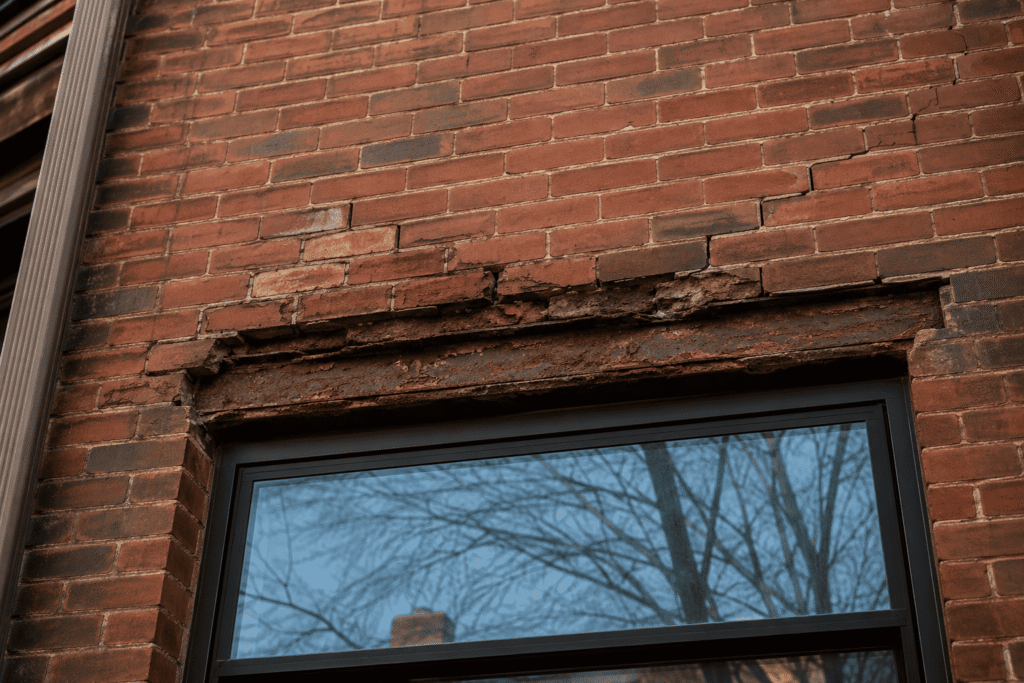
Rusted steel lintels are the single most common Unsafe finding on NYC FISP inspections and the most common cause of cracks above windows on row houses and apartment buildings. The fix isn’t sealing the cracks — it’s replacing the lintel. Innovation Construction NY has been replacing lintels on Brooklyn and Manhattan facades since 1995.
Cracks above your windows? It’s almost certainly the lintel.
📞 718-666-7679 | 212-666-5441
What a Lintel Is and Why It Fails
A lintel is the horizontal structural member spanning the top of a window or door opening. It carries the weight of the masonry above. On NYC’s pre-war brick and brownstone buildings, lintels are almost always steel — specifically, mild-steel L-shaped angles or T-sections — installed when the building was built and almost never replaced since.
Steel rusts when it gets wet. Rust occupies about 10 times the volume of the original steel. As the lintel slowly rusts and expands, it pushes outward against the masonry above it. The result is a classic stair-step crack pattern above the window opening, often paired with brick or brownstone face spalling directly above the lintel.
The diagnostic giveaway: a horizontal crack at the very top of the window opening, plus stair-step cracks fanning upward through the mortar joints. That’s rusted lintel expansion, always. Patching the cracks does nothing — the lintel is still expanding underneath.
What Happens If You Don't Fix It
Untreated lintel failure progresses predictably:
- Year 1–5: hairline cracks appear above the window. Easy to miss.
- Year 5–15: cracks widen, brick or brownstone face spalls above the opening, water gets behind the wall.
- Year 15+: brick or stone above the lintel becomes loose. Pieces fall. DOB violation. Sidewalk shed required.
- Eventually: structural failure of the wall above the opening. Emergency repair, often involving partial wall reconstruction.
The longer you wait, the more masonry has to come down to do the repair. A lintel replacement caught early might require removing 6–10 bricks. The same lintel ten years later might require removing 100+ bricks and reconstructing a significant wall section.
The Lintel Replacement Process
- Access. Ladder for ground-floor work, scaffold or swing stage for upper floors.
- Shore the opening. Temporary support for the masonry above while the lintel is removed.
- Remove masonry above the lintel. Carefully — bricks or stones removed for reinstallation.
- Remove the failed lintel. Cut out and extract the rusted steel.
- Install new lintel. We use either galvanized steel (longer life than mild steel — 50+ years) or stainless steel (essentially permanent, 100+ years) depending on building requirements and budget. Stainless is our default for landmark buildings.
- Install through-wall flashing. Sheet-metal flashing above the new lintel that directs any future water away from the steel, with weep holes to drain.
- Rebuild the masonry above. Bricks reinstalled with matched mortar. For brownstone facades, dutchman repair or resurfacing of any damaged stone.
Galvanized vs Stainless Steel
- Galvanized steel: zinc coating prevents rust. Service life 40–60 years. Cost: $80–$150 per linear foot of lintel.
- Stainless steel (304 or 316): essentially permanent. No rust. Cost: $200–$400 per linear foot.
- Hot-dipped galvanized + epoxy coating: middle option. 60–80 year life. Cost: $150–$250 per linear foot.
For a single repair on a row house, the cost difference between galvanized and stainless is $200–$400. The maintenance difference is large — we recommend stainless for any landmark or premium building. For commercial buildings being repaired under FISP, the building’s standards usually dictate.
Lintel Replacement Cost
- Single residential window lintel: $1,500–$4,500 per opening
- Apartment building lintel (in-place, suspended scaffold): $2,500–$7,000 per opening
- Full row house lintel package (8–12 openings): $15,000–$45,000
- Significant FISP lintel scope (apartment building, 30+ openings): $100,000–$400,000+
Per-opening cost drops sharply at scale — a full-building package is much cheaper per lintel than one-off repairs because access setup is amortized.
Lintel FAQs
Q: Can the existing lintel just be “cleaned and painted” instead of replaced?
No. Once a lintel has rusted enough to crack the masonry, it has lost too much structural section to be reliable, and cleaning won’t reverse the section loss. Painting rust doesn’t stop rust. The lintel needs to come out and a new one go in.
Q: Will my windows need to be removed?
Usually no — the work happens above the window from the outside. The window stays in place. We protect the glass and frame during the work.
Q: How long does single-lintel replacement take?
2–5 days per lintel including access setup, shoring, removal, installation, and masonry rebuild. For multi-lintel jobs, we work multiple openings in parallel.
Q: Does this require a permit?
Often yes, depending on scope and location. Structural work to lintels above 1st floor on multi-family buildings typically requires a DOB work permit. Landmark district buildings require LPC permits in addition. We pull all permits.
Q: My FISP report flagged 6 Unsafe lintels. Should I do all of them now?
Yes. Doing them together under one mobilization is significantly cheaper per lintel than coming back. Plus, lintels that aren’t Unsafe today are usually within years of being Unsafe — addressing the whole building during one scaffold setup makes sense.
Lintel issues? Send photos showing the cracks and we’ll give you an initial assessment.
📞 212-666-5441