
Parapet Wall Repair and Rebuild in NYC
Parapet Wall Repair and Rebuild in NYC
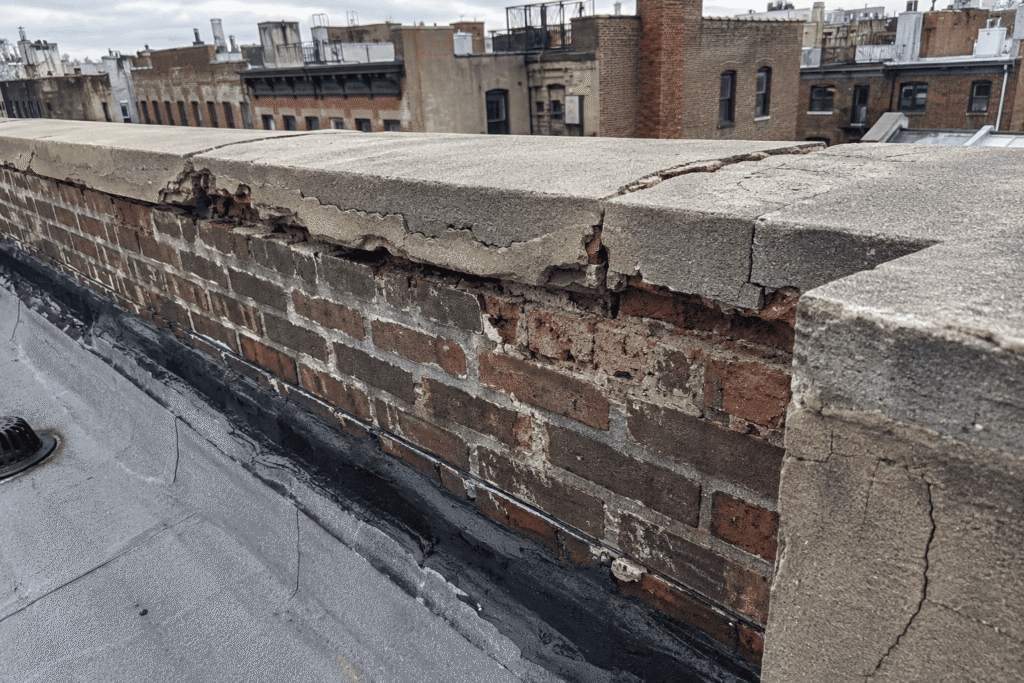
Parapets fail more often than any other masonry element on NYC buildings. They’re exposed to weather on both sides (interior roof side and exterior facade side), they take the brunt of wind-driven rain, and they’re the first place freeze-thaw damage shows up. A failing parapet is also a serious liability — loose brick or coping stone falling from a 6-story parapet causes the kind of incident that triggers DOB enforcement.
Parapet leaning, cracking, or shedding bricks? This is urgent — we’ll come look this week.
📞 718-666-7679📞 718-666-7679 | 212-666-5441
What a Parapet Is
The parapet is the section of exterior wall that extends above the roof line. On most NYC row houses it’s the 3–4 foot wall above the cornice; on apartment buildings it can be 4–8 feet tall and run the full perimeter of the roof. It typically consists of:
- The brick or masonry wall itself, often 8–12″ thick
- Coping stones — the cap at the very top, originally bluestone, limestone, or terracotta
- Through-wall flashing at the base where the parapet meets the roof
- Counter-flashing at the roof intersection
- Sometimes a roof-side waterproof coating applied to the interior face
How Parapets Fail
Failed or Missing Coping
The single most common parapet failure. Original bluestone or terracotta coping stones crack, shift, or fall off entirely. Water then enters the top of the wall and runs down inside it. We’ve seen apartment building parapets where every coping stone was loose or missing — and the building manager hadn’t noticed until water started showing up in 5th-floor apartments.
Failed Mortar at the Top
Even with intact coping, the mortar joints just below the coping are heavily weathered. Water enters there and saturates the parapet from the top down.
Leaning Parapets
Parapets can lean outward over time as the back-side mortar fails faster than the front. A parapet that leans more than 1/2″ per foot of height needs to be rebuilt — leaning parapets are a primary FISP Unsafe trigger.
Brick Spalling Throughout
When water has saturated the parapet for years, freeze-thaw spalls brick face on both sides. Eventually loose bricks can be pulled out by hand.
Roof-Intersection Failure
The base of the parapet where it meets the roof is where water gets in if the through-wall flashing is rusted or improperly lapped. This causes interior leaks at the top floor.
Repair vs Rebuild — How to Tell
Repair candidates (cheaper, simpler):
- Sound parapet wall (plumb, no significant cracking)
- Coping in good condition or with localized failures
- Localized mortar issues
- Just needs repointing, selective coping replacement, and waterproofing
Rebuild candidates (more expensive, necessary):
- Parapet leans more than 1/2″ per foot
- Significant brick spalling throughout
- Through-wall flashing failed (only accessible during rebuild)
- Coping missing or broken at most positions
- FISP Unsafe rating that won’t be cleared by surface repairs
The Parapet Rebuild Process
- Roof protection. Cover roof membrane against falling debris.
- Coping removal. Salvage what’s reusable; tag and store sound coping stones for reinstallation.
- Disassembly. Take the parapet apart course by course down to a sound base — typically just above the roof line.
- Substrate evaluation. Inspect the base course and the connection to the wall below. Repair if needed.
- Install new through-wall flashing. Stainless steel or copper sheet flashing with proper drip edge and weep holes.
- Rebuild the wall. Salvaged original brick on the exterior face for landmark buildings; new matched brick for non-landmark. Type N mortar for most pre-war buildings.
- Install coping. Reinstall salvaged stones, or new stones matched to original. Set in mortar with sealant joints between stones to allow movement.
- Counter-flash and waterproof. Roof side gets new counter-flashing tied into the roof membrane and a breathable masonry water repellent on the interior face.
Cost
- Localized parapet repointing and spot coping repair: $3,000–$10,000
- Parapet rebuild — row house (30–40 LF): $15,000–$35,000
- Parapet rebuild — apartment building (per LF): $250–$500 per linear foot
- New coping stones (per LF, installed): $80–$200 per linear foot depending on material
- Through-wall flashing retrofit (per LF): $150–$300 per linear foo
Why Parapet Work Is Often FISP-Driven
A significant share of FISP Unsafe findings are parapet-related — leaning, loose coping, spalling brick, failed flashing. The QEWI sees them on every cycle. If your building has a FISP report flagging parapet conditions, see our Local Law 11 / FISP page for how the repair process fits with the filing requirements.
Parapet FAQs
Q: Can the parapet be reinforced or stabilized instead of rebuilt?
Sometimes — for slightly leaning parapets in otherwise good condition, helical anchors can be installed through the parapet into the wall below to stabilize it. This is a structural intervention and requires an engineer’s specification. It’s cheaper than a rebuild when it works, but it’s not a fix for parapets with significant material failure.
Q: My building’s coping is original limestone. Can it be reused?
Usually yes. Sound original coping stones are salvaged during disassembly, cleaned, and reinstalled on the rebuilt parapet. Broken or badly deteriorated stones are replaced with matched limestone or bluestone.
Q: Do I need a sidewalk shed for parapet work?
For parapets above 4 stories, yes — debris fall protection is required during work. The shed cost is significant ($40–$150/lf/month). For row houses where the parapet is only ~30–40 feet up, simpler protection (debris netting, scaffold-mounted catch fans) may suffice.
Q: How long does a parapet rebuild take?
Row house parapet: 2–4 weeks. Apartment building parapet (full perimeter): 6–16 weeks depending on building size and weather.
Q: My roof is new — will parapet work damage it?
Not if done correctly. We protect the roof membrane with hardboard and tarps, restrict access points, and tie new counter-flashing into the existing roof membrane carefully. Coordinate with your roofer if your roof is under warranty.
Lintel issues? Send photos showing the cracks and we’ll give you an initial assessment.
📞 212-666-5441