
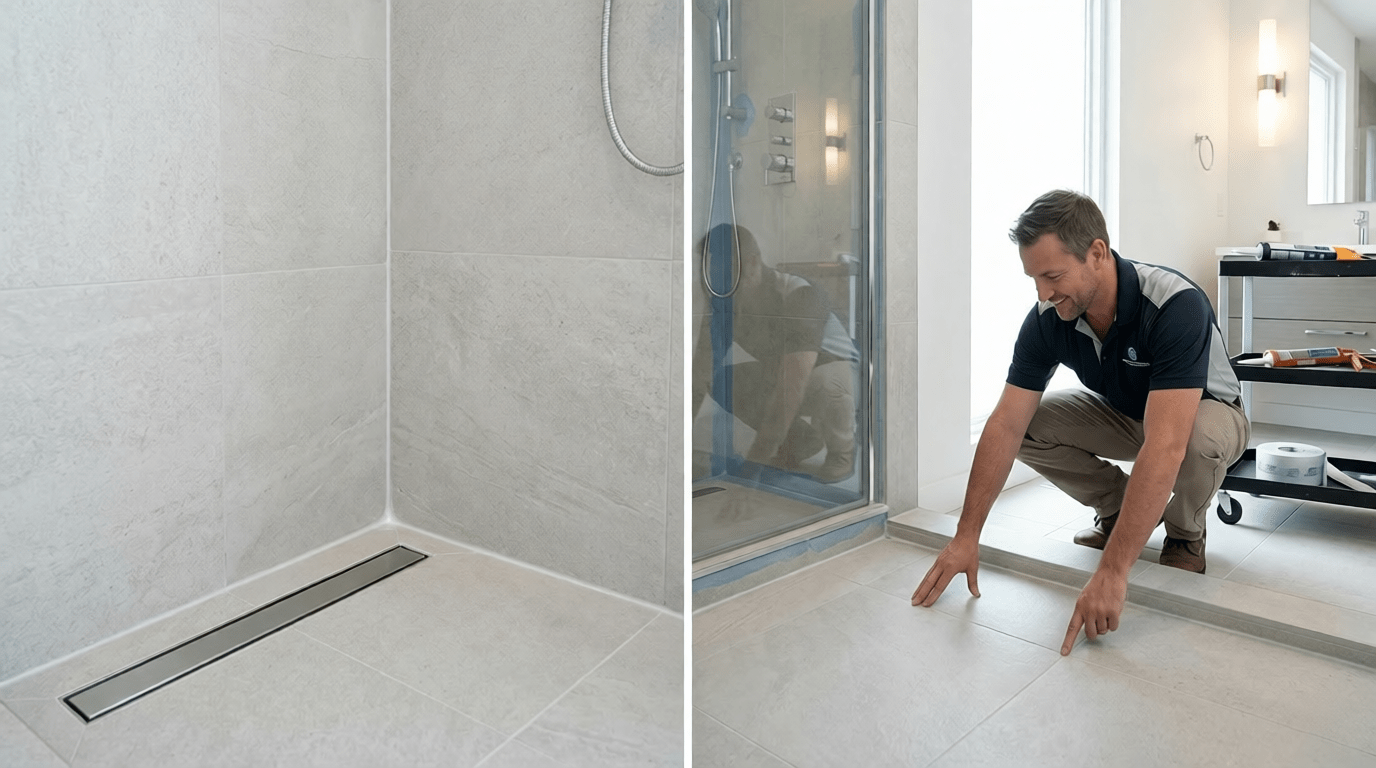
When it comes to shower waterproofing, it’s important to choose the best membrane for your needs. Various options, such as liquid waterproofing membranes and cementitious systems, offer excellent protection against leaks and water damage professional waterproofing services in NYC. By selecting the right system, you can ensure long-lasting durability and prevent costly repairs down the line.
What is Shower Waterproofing?
Shower waterproofing is the process of applying materials and systems designed to prevent water from leaking through your shower walls, floor, and other wet areas. The main goal of waterproofing is to protect the structural integrity of the bathroom, as well as to ensure that mold, mildew, and other forms of water damage do not develop over time. Without proper waterproofing, water can seep into walls, floors, and ceilings, leading to costly repairs and potential health hazards.
Why is Shower Waterproofing Important?
Protecting Your Home From Water Damage
Water leaks in showers are often slow and gradual, making them easy to ignore. However, over time, even the smallest amount of water penetration can lead to significant damage to the walls, floors, and foundation of your home. Waterproofing your shower acts as a barrier against this hidden threat brick pointing and waterproofing.
Preventing Mold and Mildew Growth
Waterproofing your shower helps prevent the growth of mold and mildew, which thrive in damp environments. These fungi not only smell unpleasant but can also pose health risks. A good waterproofing system ensures that water stays contained and doesn’t create an environment where mold can thrive.
Increased Longevity of Your Shower Area
The best shower waterproofing systems help prolong the life of your shower by preventing water-related damage. Proper waterproofing ensures that your tiles, grout, and other shower materials are protected from moisture, allowing them to last longer and reducing the need for frequent repairs.
What Are the Best Waterproofing Membranes for Showers?
When it comes to choosing a waterproofing membrane for showers, there are a variety of options to consider. Each type has its own set of benefits, and the best option for your shower will depend on factors like the size of your shower, your budget, and the level of protection you need.For recognized shower installation standards, you can also review the Tile Council of North America shower waterproofing guidance before choosing the right membrane system.
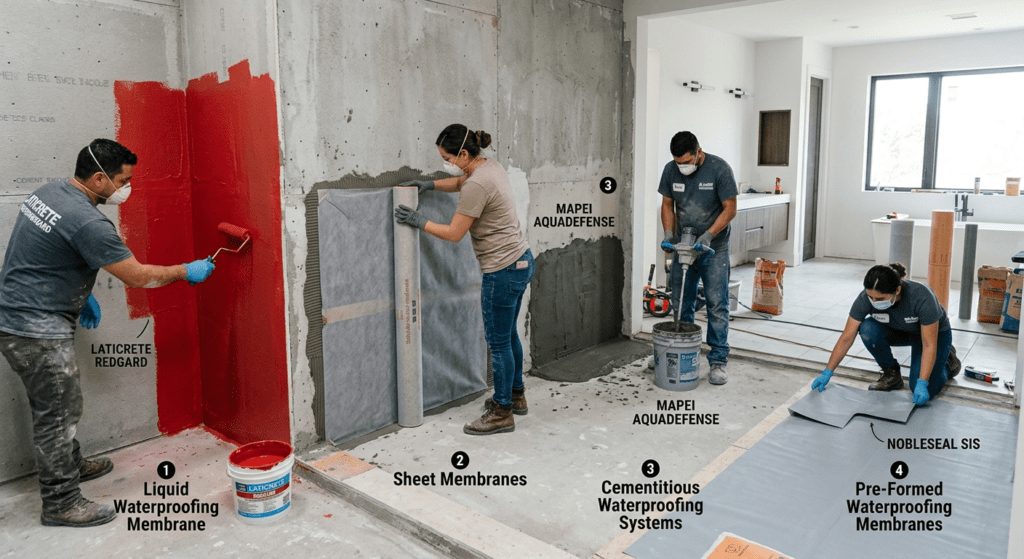
1. Liquid Waterproofing Membrane
Liquid membranes are one of the most commonly used materials for shower waterproofing. They are easy to apply and provide a seamless barrier that covers every nook and cranny of your shower. Liquid waterproofing membranes are ideal for shower walls, floors, and corners. They are applied with a brush or roller and dry to form a flexible, waterproof layer.
2. Sheet Membranes
Sheet membranes are another great option for waterproofing showers. These materials are typically made of rubber or fiberglass and come in large sheets that you install over your shower walls and floor. They are highly durable and provide excellent protection against water leaks, making them one of the best waterproofing systems for showers.
3. Cementitious Waterproofing Systems
Cementitious waterproofing is a highly effective solution, especially for wet areas. These systems are easy to apply and consist of a mixture of cement, water, and other materials. Once applied, they harden and form a waterproof barrier that can withstand the harsh conditions of a shower. Cementitious systems are particularly effective for waterproofing shower floors.
4. Pre-Formed Waterproofing Membranes
Pre-formed membranes are sheets that come with pre-installed adhesives for easy installation. These membranes are often used to waterproof the floor area of a shower and are perfect for tight or irregular spaces. They can be installed over a cement backer board or directly onto the subfloor, offering excellent protection for shower floors.
Waterproofing a Shower: Step-by-Step Guide
To ensure your shower is completely waterproof, following a step-by-step process is key. Here’s how to do it:
Step 1: Prepare the Shower Area
Before you begin the waterproofing process, make sure the surface is clean, dry, and free from debris. Remove any existing tiles, grout, or caulking, and ensure the walls and floor are solid. If there are any cracks or damage to the surface, repair them before moving forward.
Step 2: Apply the Waterproof Membrane
Depending on the type of waterproofing system you’ve chosen, apply the waterproofing membrane to the walls and floor of your shower. If you’re using a liquid membrane, use a brush or roller to spread the coating evenly. For sheet membranes, simply unroll the material and adhere it to the surface.
Step 3: Seal the Edges and Corners
Make sure to seal all edges, corners, and joints properly. This is crucial for preventing leaks. Use waterproof tape or specialized corner pieces to ensure that the membrane adheres securely to all areas.
Step 4: Allow the Membrane to Dry
Let the waterproofing membrane dry completely. The drying time will vary depending on the type of material used, so be sure to follow the manufacturer’s instructions. This step is essential to ensure the waterproofing barrier forms correctly.
Step 5: Install Shower Tiles
Once the membrane is fully dry, you can begin installing the tiles. Use waterproof grout and caulk to seal the edges around the tiles, ensuring that no water can seep through the gaps.
Types of Waterproofing for Showers
There are various types of waterproofing solutions available for different parts of the shower. Each solution serves a specific purpose to ensure the entire shower area is completely waterproof.
Effective Shower Waterproofing Methods for Long-Lasting Protection
When it comes to shower waterproofing, there are several effective methods and options to consider, ensuring your shower base stays protected from water damage. One of the most popular choices is using a waterproof sealant, which can be applied around the grout joints and tile backer board to prevent water vapor from seeping through. For enhanced drainage, consider installing a linear drain or upgrading your shower drain systems with a high-quality drain flange that offers an additional layer of protection. Additionally, bonding adhesive plays a key role in securing the waterproofing materials, while the traditional Hot Mop method remains a reliable choice for waterproofing showers. Remember that allowing adequate cure time for each layer of waterproofing is crucial to ensure long-lasting protection and prevent leaks. Each shower waterproofing option, if it’s through a waterproof sealant, bonding adhesive, or proper installation of the drain systems, contributes to a well-sealed, moisture-free shower space.
1. Shower Floor Waterproofing
Waterproofing your shower floor is essential to prevent water from seeping beneath the tiles. Common materials for floor waterproofing include liquid membranes, cementitious systems, and pre-formed membranes thin-set mortar.
2. Shower Wall Waterproofing
The walls of your shower are just as susceptible to water damage as the floor. Be sure to apply waterproofing membrane to the entire wall area, focusing especially on the areas that are exposed to direct water flow. Wall waterproofing is often done with liquid or sheet membranes.
3. Shower Tray Waterproofing
If you have a shower tray, it’s important to apply a waterproofing membrane to prevent water from leaking around the edges. Shower tray waterproofing helps to ensure that water stays within the tray and doesn’t damage the surrounding floor.
Common Problems with Shower Waterproofing and How to Avoid Them
1. Improper Application of Waterproofing Materials
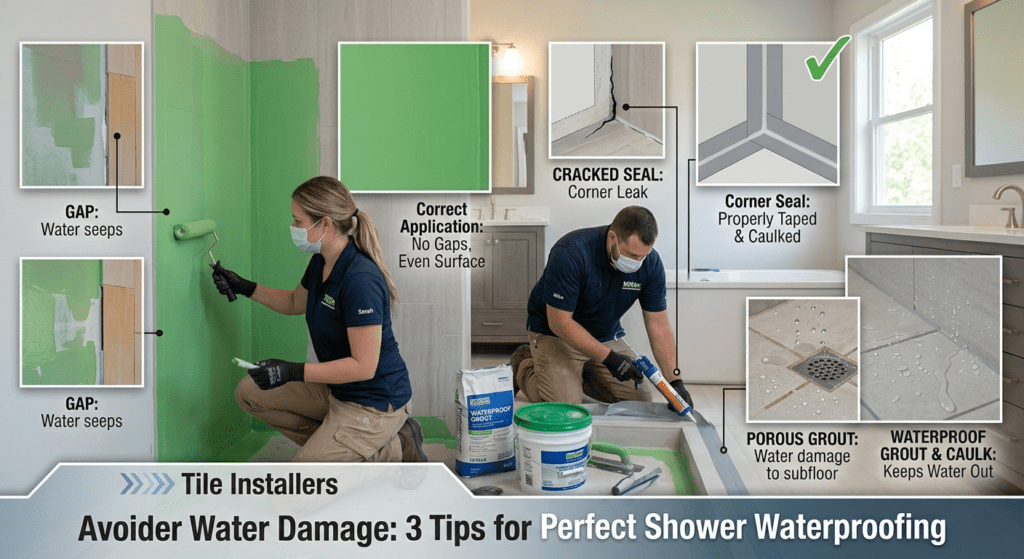
One of the most common problems with shower waterproofing is improper application of the materials. If the membrane is not applied shower pan evenly or if there are gaps, water can seep through and cause damage. To avoid this, be sure to follow the manufacturer’s instructions carefully and consider hiring a professional if you’re unsure waterproof membrane.
2. Inadequate Sealing of Corners and Edges
Corners and edges are particularly vulnerable to water leaks. Ensure that these areas are properly sealed with waterproof tape or caulking to prevent any moisture from penetrating the surface.
3. Failure to Use Waterproof Grout and Caulk
Grout and caulk play a vital role in keeping water out. Always use waterproof grout and caulk when installing tiles in your shower. These materials help seal the gaps and prevent water from seeping into the walls or floor.
Conclusion: Invest in Shower Waterproofing for Long-Lasting Protection
Shower waterproofing is a critical part of bathroom maintenance that should never be neglected. By selecting the best waterproofing membrane for showers, applying it correctly, and ensuring all areas are properly sealed, you can protect your bathroom from costly water damage and mold growth. If you’re looking for the best shower waterproofing system, shower membrane installation, or simply want to prevent leaks, there are numerous waterproofing solutions available to meet your needs.
Make sure to choose the right waterproofing solution based on your shower’s needs and budget, and you’ll enjoy a long-lasting, leak-free shower area for years to come shower drain!