
Water Leaking Through a Brick Wall in NYC — How to Diagnose and Fix It
Water Leaking Through a Brick Wall in NYC — How to Diagnose and Fix It
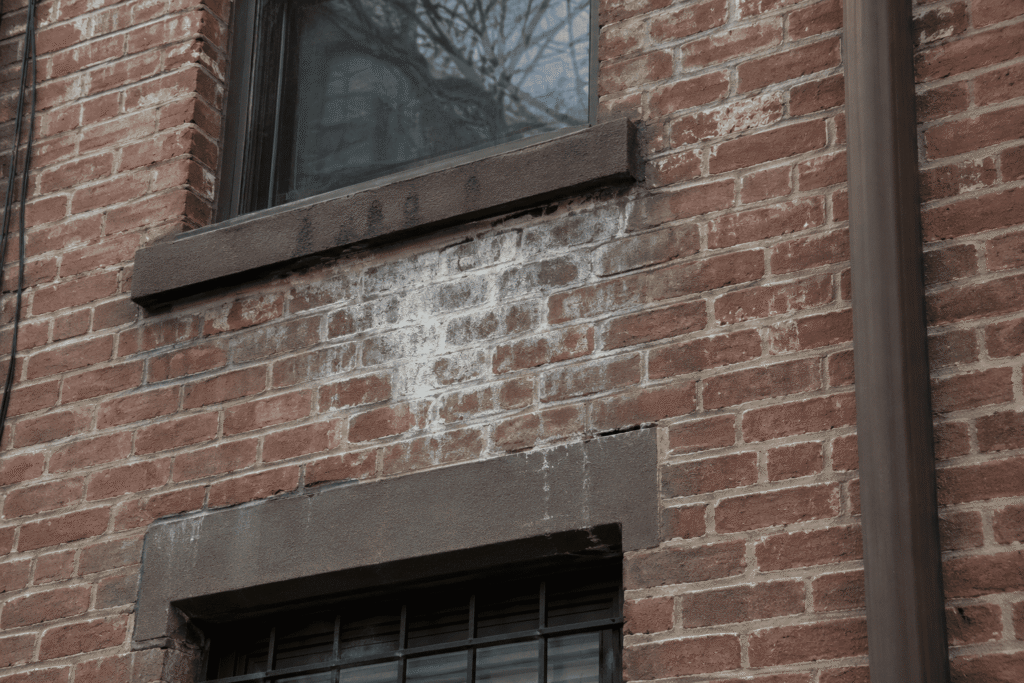
Water coming through a brick wall is one of the most common calls we get. It’s also one of the most commonly mis-diagnosed and mis-repaired problems. The water you see on your interior wall is almost never coming through the brick at the spot where you see the stain — it’s traveling laterally inside the wall from an entry point that can be 5, 10, or 20 feet away. Fix the wrong spot and the leak comes right back.
This page walks you through what actually causes brick walls to leak in NYC, how to figure out the real source, and what proper repair looks like. If you want us to come look, we cover Brooklyn and Manhattan.
Brick wall leak? Don’t seal anything yet. Call us first — we’ll come diagnose it properly.
📞 718-666-7679 | 212-666-5441
How Water Actually Gets Through Brick Walls
Brick by itself is somewhat porous, but a properly built and maintained brick wall doesn’t leak. What changes that:
1. Failed Mortar Joints
The mortar between bricks is softer than the brick by design (so it absorbs movement and freeze-thaw expansion). Over decades it weathers out, cracks, recedes, or falls out entirely. Water enters through the failed joints, runs down the back of the wythe of brick, and emerges wherever it finds a path — often well below the actual entry point. This is the most common cause of brick wall leaks in NYC and the answer is repointing, not surface sealing.
2. Cracked or Missing Lintels and Sills
Steel lintels above windows rust and expand, cracking the masonry above. Water enters those cracks, runs down behind the window frame, and shows up on the interior wall below the window. Stone sills that have cracked or lost their proper slope direct water into the wall instead of away from it.
3. Parapet and Coping Failures
This is the most-missed source on multi-story buildings. Water enters through failed mortar at the top of a parapet wall or under loose coping stones, runs down inside the wall, and emerges floors below. A leak appearing in a third-floor apartment is often originating at the parapet 4–6 stories up.
4. Cracked Brick or Spalled Brick Face
When the face of a brick spalls off (the outer surface flakes), the exposed inner brick is more porous and absorbs much more water. A cluster of spalled brick faces on a sun-and-rain exposed wall can turn the whole wall into a sponge.
5. Flashing Failures
Through-wall flashing — sheet metal embedded in the wall at sills, lintels, and other interruptions — directs water back out of the wall. When the flashing rusts through, was never installed, or was sealed over by a prior repair, water that gets into the wall has nowhere to go but inward.
6. Roof Edge and Cornice Failures
Water entering at the roof edge or behind a failing cornice runs down inside the wall the same way parapet water does.
7. Window Caulk and Frame Failures
Not technically the brick failing — but caulk around window frames is often what’s letting water into the wall in the first place.
What NOT to Do
Don't Apply a Surface Sealer to a Wet Wall
Water-repellent coatings (silicone, silane, siloxane, acrylic) are useful as part of a complete repair — but applying them to a wall that’s actively leaking traps the water inside. The leak doesn’t stop; it just shifts to a different spot, often pushing efflorescence and salts into the interior plaster. Worse, film-forming sealers (acrylic, urethane) prevent the wall from drying and can cause far worse damage than the original leak.
Don't Caulk Brick Joints
We see this constantly. Someone tries to “stop the leak” by running flexible caulk along brick mortar joints. Mortar isn’t supposed to be sealed — it’s supposed to breathe. Caulking joints traps moisture inside the wall and accelerates brick spalling. The fix is repointing with proper mortar, not caulk.
Don't Trust Quick Patches
“Hydraulic cement” patches that stop visible water entry in a specific spot can be useful temporarily, but they don’t address the underlying water path. Within a year or two the leak will resurface a few feet over.
Don't Sandblast or Pressure-Wash Aggressively
This is the classic move that destroys old brick. Sandblasting strips the fired outer skin off the brick, leaving the much more porous interior exposed. A sandblasted brick wall absorbs 5–10x more water than the original wall did.
Proper Diagnosis and Repair
When we look at a brick wall leak, we walk through this sequence:
- Interior survey. Where exactly is the water showing? What direction does it appear to be moving? Is it seasonal, after rain, or constant?
- Exterior elevation review. What’s above and around the interior stain on the exterior of the wall? We look at mortar joints, brick condition, lintels, sills, parapet (if applicable), roof edge, and any roof drains or scuppers.
- Water test if needed. For ambiguous cases we’ll run a controlled hose test, wetting one area at a time and waiting for the interior to respond. This isolates the entry point.
- Repair scope. The scope follows from diagnosis. Typically some combination of: repointing the affected wall area, lintel or sill repair, parapet/coping rebuild, through-wall flashing installation, and finally a breathable water repellent applied only after the wall is fully dry and repaired.
Typical Repair Costs
NYC brick leak repairs vary widely with scope:
- Localized repointing (small wall area): $1,500–$5,000
- Full elevation repointing (one whole wall of a row house): $8,000–$25,000
- Lintel replacement: $1,500–$4,500 per opening
- Parapet rebuild: $200–$500 per linear foot
- Through-wall flashing retrofit: $150–$400 per linear foot
- Breathable water-repellent coating: $2–$5 per square foot of wall area
The biggest variable is access. A wall that can be reached from grade or from a neighbor’s roof is much cheaper than one requiring scaffold or sidewalk shed.
Frequently Asked Questions
Q: I had my wall repointed two years ago and it’s leaking again. What went wrong?
Most likely one of three things: the wrong mortar was used (Portland-heavy mortar that doesn’t bond to old brick), the joints weren’t ground out deep enough before repointing (mortar applied over old failed mortar just falls out), or the actual entry point wasn’t on the wall that was repointed. We diagnose all three before quoting.
Q: Will a clear sealer stop my brick from leaking?
Not by itself. Sealers should be the final step after the wall is properly repaired and dry. Applied to a failing wall, they make the problem worse. Apply them only after the underlying repair is complete and use breathable siloxane or silane — never film-forming acrylic or urethane.
Q: How long until I have to deal with this? Can I wait until spring?
Depends on severity. Active leaks during winter freeze-thaw cycles accelerate damage — water in the wall freezes and pushes brick face off, makes existing cracks larger, and damages the interior plaster and any insulation. If the leak is significant, dealing with it before winter is meaningfully cheaper than dealing with it the following spring.
Q: My building manager says it’s a roof leak, not a brick leak. How do I know?
Roof leaks usually appear at the ceiling first and at locations near roof penetrations, drains, or wall intersections. Brick wall leaks appear on the wall, usually below window level or below floor level on multi-story buildings. But there’s overlap — parapet and roof-edge water can present as either, and water travels. A proper exterior survey identifies the entry, not a guess from inside.
Q: I’m in a co-op and the leak is in my apartment. Who pays?
In nearly all NYC co-ops and condos, the building envelope is the building’s responsibility, not the individual shareholder. If the leak is coming from the brick exterior, parapet, roof, or any common element, the building pays for the exterior repair. Interior damage repair is typically the shareholder’s. Check your proprietary lease or condo declaration for specifics.
Stop guessing — get an honest diagnosis. We charge nothing for the evaluation and we’ll tell you what’s actually wrong.
📞 718-666-7679 | ✉️ innovation.construction@yahoo.com