
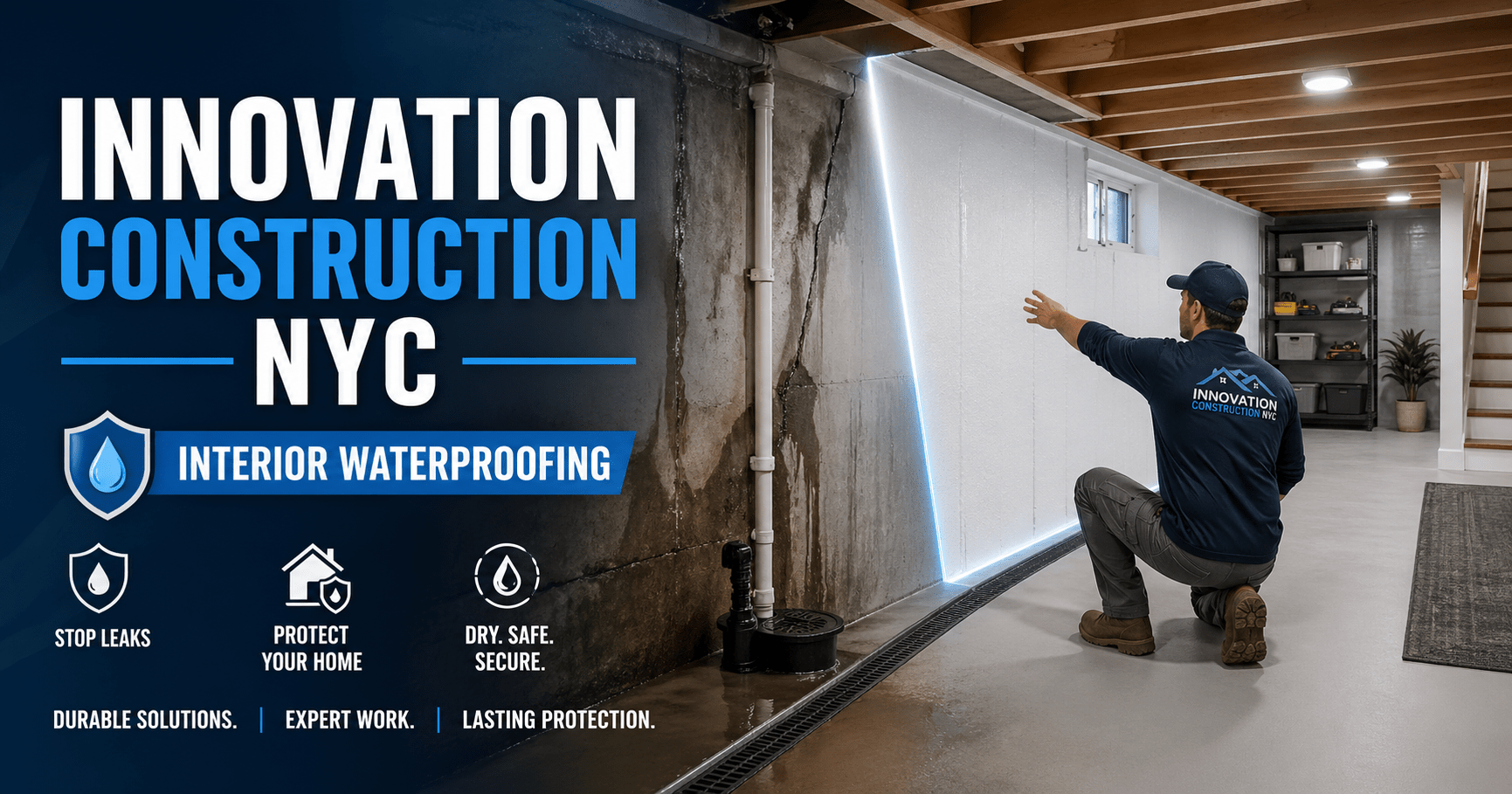
When homeowners think about waterproofing, their minds often jump to exterior excavation and drainage. Yet in many cases the most effective first line of defence against moisture is a well‑designed interior waterproofing system. Also called interior foundation waterproofing, this approach manages water once it has penetrated the foundation and keeps basements dry and usable. In this post for Innovation Construction NY we explain why interior waterproofing is important, how it differs from exterior methods, and what kinds of interior basement waterproofing systems and products are available. Along the way we will share insights from reliable sources and use key phrases such as interior concrete waterproofing, basement interior waterproofing and interior wall waterproofing to help you find the information you need.
Interior vs. Exterior: Understanding the Difference
Waterproofing a basement can be tackled from the outside or the inside. An exterior system creates a barrier on the outside of your foundation wall using membranes, coatings and drainage tiles. This method prevents water from entering but is expensive and disruptive because it requires excavation around the home. In contrast, an interior waterproofing system is installed inside the basement and manages water after it has already seeped through. According to Stratum Structural Systems, interior systems are generally more affordable, less disruptive to install and easier to maintain because all components remain accessible inside the house. However, interior methods do not stop water from penetrating the foundation, so they must be paired with measures like crack repair and proper grading.
The Modernize home‑improvement guide notes that there are three main approaches to basement waterproofing: interior waterproofing, exterior waterproofing and drainage systems. Interior methods manage water that has already entered the basement using sealants, drainage channels, vapor barriers and sump pumps. Exterior methods block water at the foundation through excavation, membranes and coatings. Many homeowners ultimately benefit from a combination of these techniques to achieve long‑term protection.
Causes of Interior Basement Moisture
Before choosing a solution, it’s important to understand why basements get wet. The American Dry foundation specialists explain that hydrostatic pressure from saturated soil, improper exterior grading, clogged gutters, condensation and cracks in concrete can all force moisture through the walls and floor. A wet or leaky basement isn’t just inconvenient; it can lead to mold growth, structural damage and decreased indoor air quality. Daniel’s Waterproofing echoes this concern, noting that proper moisture control helps prevent basement flooding, reduces mold, protects the foundation and keeps the space usable.
Why Interior Foundation Waterproofing Matters
Homeowners often assume that water problems originate outside, but interior sources like plumbing leaks and condensation can also saturate a basement. An interior foundation waterproofing system addresses moisture once it enters and provides several advantages:
- Cost‑effective and less disruptive: Because there is no excavation, interior solutions are typically cheaper and faster to install.
- Accessible for maintenance: Components such as drains, sump pumps and vapor barriers can be inspected and serviced easily from inside the home.
- Year‑round installation: Unlike exterior waterproofing, which is weather dependent, interior work can be performed at any time of the year.
- Improved indoor air quality: By controlling moisture, interior methods help reduce mold and mildew, protecting health and preserving building materials.
The Environmental Protection Agency advises that controlling moisture is one of the most important steps in preventing indoor mold growth and maintaining healthy air. Interior waterproofing systems can play a key role in achieving this goal.
Interior Basement Waterproofing Systems and Products
Selecting the right interior basement waterproofing systems requires understanding the different technologies available. Intermountain Coatings notes that interior solutions tackle water issues from inside the basement and are less invasive than exterior methods. The following sections describe common interior basement waterproofing products and approaches.
Sealants and Waterproof Paints
For minor moisture issues, homeowners often begin by applying waterproof sealants or basement waterproofing paint to interior walls. Intermountain Coatings explains that sealants are applied to basement walls and floors to create a barrier that blocks water vapor and small leaks. These products are easy to apply and affordable, making them a popular DIY solution. However, they are not effective against standing water or significant leaks and may require frequent reapplications.
Daniel’s Waterproofing points out that sealants can block small leaks, protect wall surfaces and reduce moisture penetration. Waterproof paint creates a moisture barrier on interior concrete walls and can improve the wall’s appearance. Still, these products should be viewed as temporary measures or supplementary to a broader interior foundation waterproofing system, particularly in homes with larger leak issues.
Interior Drainage Channels and Sump Pumps
For more severe water intrusion, professionals often install interior drainage systems that collect water along the perimeter of the basement floor and direct it to a sump pump. Intermountain Coatings describes this process: a trench is dug along the edge of the basement floor and perforated pipes are installed to collect water, which is then directed to a sump pump. Sump pumps actively remove water from the home, handle large volumes during heavy rain and are highly effective at preventing flooding. The downside is that these systems require professional installation, a higher upfront cost and regular maintenance.
Daniel’s Waterproofing emphasizes that a professionally installed interior basement drainage system is one of the most reliable long‑term solutions: it collects water beneath the basement floor, redirects it to a sump pump and pumps it safely away. Many waterproofing professionals consider this the most dependable method for controlling basement water problems.
Vapor Barriers and Moisture Barriers
Another option is to install vapor barriers on the inside of the basement walls. Intermountain Coatings notes that vapor barriers reduce humidity and prevent mold growth by blocking moisture from seeping through. These barriers are easy to install and work well as a supplemental solution but do not address liquid water intrusion.
LSI phrases such as interior moisture barrier, interior damp proofing and interior water damage protection underscore the importance of these barrier systems. They help create a continuous moisture barrier on walls, which can be integrated with drains and pumps to form a comprehensive interior water control system.
Crack Injections and Foundation Repairs
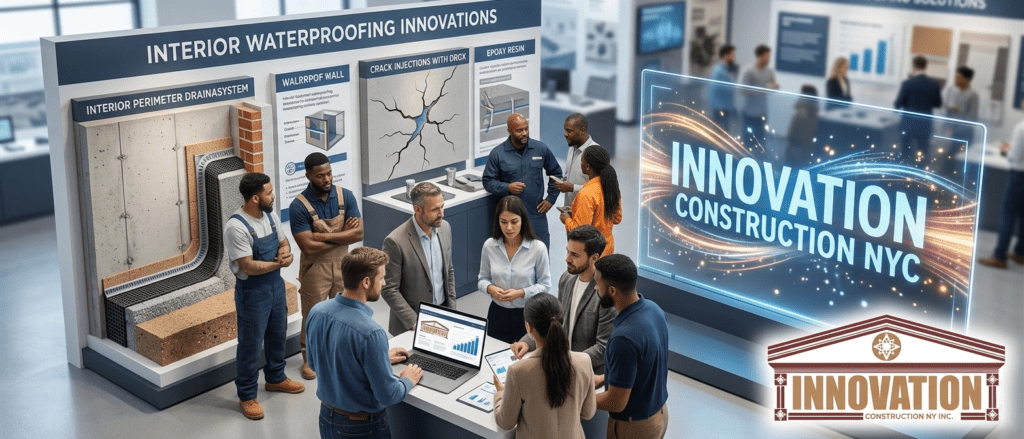
Sometimes water enters through cracks in concrete walls or floors. In such cases, contractors may perform interior crack injection using epoxy or polyurethane. These resins fill the crack and create a waterproof seal from the inside. Repairing cracks early prevents larger structural issues down the line and is often combined with other interior solutions such as interior foundation sealing and interior foundation repair.
Interior Waterproofing Products and Brands
There are many interior waterproofing products on the market, ranging from silicate sealers and epoxy coatings to modular drainage tiles. When evaluating products, look for those designed for interior concrete waterproofing and interior foundation waterproofing products, as they are formulated to bond with porous concrete and resist hydrostatic pressure. Professional waterproofing companies in Los Angeles and Toronto often use proprietary systems tailored to their region’s soil and rainfall conditions. If you are in a humid southern climate or a colder city like Toronto, a local contractor can recommend the best interior basement waterproofing products for your situation.
Pros and Cons of Interior Waterproofing
Benefits of Interior Solutions
Interior systems come with several advantages:
- Affordability and speed: Interior waterproofing is generally more cost‑effective than exterior methods and can be completed quickly. It does not require heavy excavation, which keeps labor and landscaping costs down.
- Minimal disruption: Because the work takes place inside, there is little damage to landscaping or driveways. This makes interior methods attractive for urban homes or properties with limited exterior access.
- Flexible installation timeline: Aqua Dry notes that interior solutions can be installed at any time of year, unlike exterior projects that depend on weather and soil conditions.
- Immediate results: Interior drainage channels and sump pumps begin working as soon as they are installed, providing immediate relief from leaks and high humidity.
- Improved air quality and health: By controlling humidity and preventing mold, interior waterproofing helps protect your family’s health.
Drawbacks and Limitations
Interior methods aren’t perfect. Experts caution that these systems do not prevent water from entering through the foundation walls. Instead, they manage the water once it is inside. If left unaddressed, foundation cracks may worsen over time, potentially leading to structural issues. Many interior solutions require a sump pump, adding to installation costs and requiring ongoing maintenance.
Aqua Dry highlights that interior waterproofing can be disruptive to install because portions of the basement floor may need to be removed to place drainage pipes. For severe leaks or flooding, exterior systems may still be necessary. Finally, some homeowners find it difficult to achieve a completely waterproof basement foundation using interior methods alone; combining interior and exterior strategies often yields the best results.
Comparing Costs and Long‑Term Value
How much does waterproofing a basement cost? Modernize provides a helpful cost breakdown: applying sealants and waterproof coatings typically costs $1–$7 per square foot; waterproofing paint costs $2–$6 per square foot; installing an interior drainage and sump pump system ranges from $4,500 to $10,000; DIY crack sealing may cost under $500 in materials. Exterior methods are more expensive, often running $10,000 to $25,000 or more for a complete system.
While the upfront cost can be significant, delaying waterproofing can lead to far greater expenses. Uncontrolled water can warp walls, rot wood, and damage insulation and drywall. Mold remediation alone can cost thousands of dollars, and foundation repairs can run $2,500 to $10,000 or more. Investing in interior waterproofing and maintenance helps avoid these costs, protects your home’s value and ensures a safe, comfortable living space.
Regional Considerations: Los Angeles, Toronto and Beyond
Climate and soil conditions influence the best waterproofing strategy. In wet regions or areas with a high water table, such as parts of the Midwest and Northeast, hydrostatic pressure on basement walls can be intense. In Los Angeles, where earthquakes and occasional heavy rains can stress foundations, homeowners often work with companies in Los Angeles interior repairs exterior waterproofing leak issues to address both seismic cracks and water problems. These companies offer integrated services combining interior foundation waterproofing with structural repairs and exterior drainage to handle unique regional challenges.
Meanwhile, Toronto experiences freeze–thaw cycles and significant snow melt, making interior waterproofing Toronto a common search for homeowners seeking protection against seasonal basement leaks. Contractors there often recommend combining interior basement waterproofing products like sump pumps and vapor barriers with exterior membrane coatings to withstand both winter and spring moisture. Regardless of location, choosing a qualified contractor familiar with local soil conditions ensures that your interior water control system will perform effectively.
Choosing the Right Interior Waterproofing Solution
With so many options—sealants, paints, drainage channels, pumps, vapor barriers, crack injections and more—it can be overwhelming to select the right waterproof interior solution. A few guidelines can help:
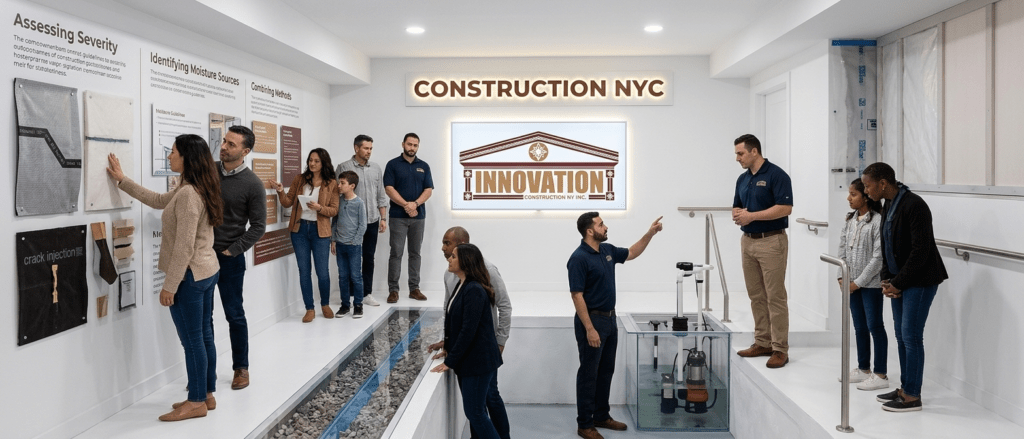
- Assess the severity of the problem. For light condensation or minor leaks, sealants and vapor barriers may suffice. For persistent leaks or standing water, an interior drainage channel and sump pump system is likely necessary.
- Identify the source of moisture. Is water seeping through cracks, condensing on walls or rising through the floor? Understanding the source helps determine if interior foundation sealing, interior moisture mitigation or comprehensive drainage is needed.
- Consider combining methods. Many homes benefit from using several strategies together, such as applying waterproof paint, installing an interior drain and adding a moisture barrier. Complementary techniques like proper exterior grading, maintaining gutters and applying sealants add extra protection.
- Work with professionals. While some DIY products offer temporary relief, long‑term interior damp proofing typically requires professional design and installation. The American Society of Home Inspectors recommends addressing the source of moisture rather than relying solely on coatings.
Conclusion: Invest in Interior Waterproofing for Lasting Protection
From minor condensation to major leaks, interior waterproofing provides homeowners with a practical way to manage water, protect their foundation and preserve their indoor air quality. Understanding the difference between interior and exterior methods and choosing the right combination of systems—sealants, drainage channels, sump pumps, vapor barriers and crack repairs—ensures that your basement remains dry and healthy. Though interior methods do not prevent water from entering through the foundation walls, they offer cost‑effective, accessible and year‑round solutions that can be tailored to your home’s needs.
When evaluating basement interior waterproofing or searching for interior waterproofing toronto, remember that each home is unique. A professional assessment will identify the underlying causes of moisture and recommend the right blend of interior and exterior strategies. If you live in Los Angeles with earthquake‑induced cracks, Toronto with freeze–thaw cycles or any region in between, investing in a robust interior waterproofing system is an investment in the longevity and safety of your home.